music.wikisort.org - Instrument
Jaapi or Japi (Bodo: Khofri) is a traditional conical hat from Assam, India similar to other Asian conical hats is made from tightly woven bamboo and/or cane and tokou paat (Trachycarpus martianus) a large, palm leaf. The word jaapi derives from jaap meaning a bundle of taku leaves. In the past, plain jaapi were used by ordinary people in Assam and by farmers for protection from the sun, while ornate jaapi were worn as a status symbol by royalty and nobility. Decorative sorudoi jaapi are made with intricate cloth designs (primarily red, white, green, blue, and black) that are integrated into the weaving.
 An Assamese Jaapi | |
| Related instruments | |
|---|---|
|
| Part of a series on the |
| Culture of Assam |
|---|
 |


History

The medieval Chutia kings (a sub-group of Bodo-Kacharis) used the Jaapi as a cultural symbol. The last Chutia king Nitipal gifted gold and silver embroidered Jaapis to the Ahom king Suhungmung as presents in his attempts for a treaty in the year 1523.[4][5] After annexing Sadiya in 1524, the Ahom king received a lot of treasure and bounty, which included Jaapis.[6] In the year 1525, the Ahom king gifted some of the silver Jaapis obtained from the Chutia king and other items, to negotiate peace with the Mongkawng chief Phukloimung, a Shan state in present Upper Myanmar (called Nora in Buranjis) who had attacked Sadiya.[7] During the Ahom rule, Jaapi-hajiya Khel (guild for making Jaapis) was monopolised by Chutias, which indicate that they were experts in weaving Jaapis.[8] Apart from this, the Baro-Bhuyans of Central Assam are also said to have used Jaapis. As per the Satsari Buranji, the Ahom kings adopted the Tongali, Hasoti and Tokou-patia Japi from the Baro-Bhuyans.[9]
Cultural symbol
Today the jaapi is a symbol of Assam. It is worn in a style of Bihu dance, used as protection against the elements, offered as a sign of respect in ceremonies, and placed as a decorative item around the house, especially in the walls as a welcome sign.[10][11]
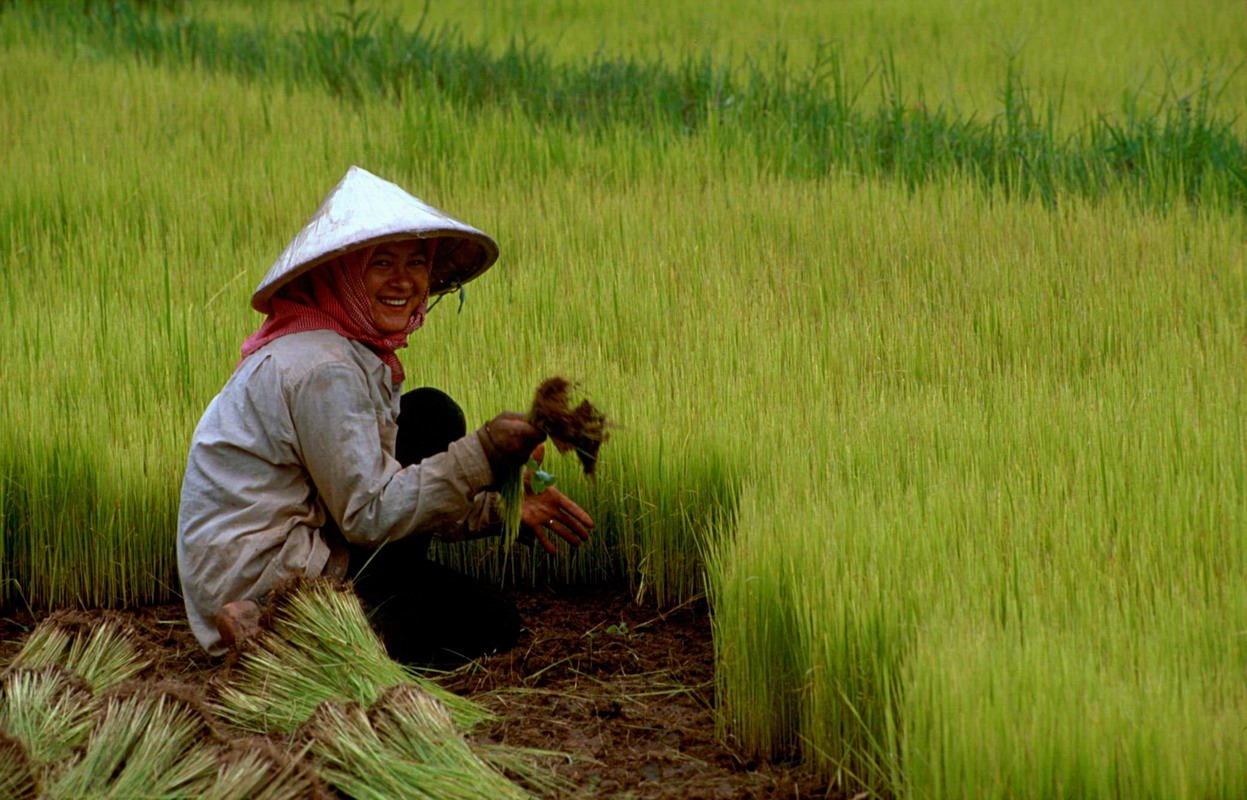
Originally Japi was an agricultural headgear by farmers to protect themselves from rain or sun's heat. The Bodo-Kacharis having agricultural as the main profession often used them in the rice fields. Similar headgears are also seen to be used all throughout East Asia.[12] Bishnu Prasad Rabha added Japi dance to Assamese culture through Jaymati movie from Bodo community's Khofri Sibnai Mwsanai.
Types
- Sorudoi japi: Used by women, especially brides.
- Bordoi japi: Used by royalty since ancient times (Kamrupa).
- Panidoi/Haluwa japi:Used by farmers in fields.
- Garakhiya japi: Used by cattle herders.
- Pitha japi: Used as hoods, sometimes during cultivation.
- Tupi/Varun japi: Used in rain as protective hats.
See also
- Conical Asian hat
- Culture of Assam
- List of hats and headgear
- Textiles and dresses of Assam
Notes
- "639 Identifier Documentation: aho – ISO 639-3". SIL International (formerly known as the Summer Institute of Linguistics). SIL International. Retrieved 29 June 2019.
Ahom [aho]
- "Population by Religious Communities". Census India – 2001. Ministry of Home Affairs, Government of India. Retrieved 1 July 2019.
Census Data Finder/C Series/Population by Religious Communities
- "Population by religion community – 2011". Census of India, 2011. The Registrar General & Census Commissioner, India. Archived from the original on 25 August 2015.
2011census/C-01/DDW00C-01 MDDS.XLS
- Khanikar 1991, p. 100.
- "Then the Chutiâ king desired to send silver and gold lipped Jâpi(Kup-ngiun-kham),gold bracelets(Mao-kham), gold basket(Liu-kham), gold ring (Khup-kham), gold bookstand (Khu-tin-kham), gold pirâ(Kham-ku), horse(Ma), elephant(Chang-pai), and two Âroans(Phra-nun) and Xorais(Phun) to the Ahom king."
- Mahanta 1994, p. 10.
- Bhuyan 1960, p. 62.
- "The Chutiyas were engaged in all kind of technical jobs of the Ahom kingdom. For example, the Khanikar Khel (guild of engineers) was always manneed by the Chutiyas. The Jaapi-Hajiya Khel (guild for making Jaapis) was also monopolished by them."(Dutta 1985:30)
- Bhuyan 1960, p. 135.
- Handoo 2003, p. 46.
- Assam General Knowledge. Bright Publications. p. 98. ISBN 9788171994519.
- শান্তনু কৌশিক বৰুৱা (2001). অসম অভিধান. বনলতা. pp. ১৪৪–১৪৬.
References
- Dutta, Sristidhar (1985), The Mataks and their Kingdom, Allahabad: Chugh Publications
- Khanikar, S (1991), Chutia Jaatir Itihax aru Luko-Sanskriti
- Bhuyan, Surjya K. (1960), Satsari Buranji
- Handoo, Jawaharlal (2003), Folklore in the Changing Times, Original from Indiana University: Indhira Gandhhi Rashtriya Manav Sangrahalaya
External links
Clothing | |||||||||
|---|---|---|---|---|---|---|---|---|---|
| Headwear |
| ||||||||
| Neckwear |
| ||||||||
| Tops |
| ||||||||
| Trousers |
| ||||||||
| Suits and uniforms |
| ||||||||
| Dresses and gowns |
| ||||||||
| Skirts |
| ||||||||
| Underwear and lingerie |
| ||||||||
| Coats and outerwear |
| ||||||||
| Nightwear |
| ||||||||
| Swimwear |
| ||||||||
| Footwear |
| ||||||||
| Legwear |
| ||||||||
| Accessories |
| ||||||||
| Dress codes |
| ||||||||
| Related |
| ||||||||
 Clothing portal Clothing portal | |||||||||
Другой контент может иметь иную лицензию. Перед использованием материалов сайта WikiSort.org внимательно изучите правила лицензирования конкретных элементов наполнения сайта.
WikiSort.org - проект по пересортировке и дополнению контента Википедии