music.wikisort.org - Event
Eurovision Song Contest's Greatest Hits (also known as Eurovision's Greatest Hits) was a live television concert programme organised by the European Broadcasting Union (EBU) and produced by the British Broadcasting Corporation (BBC) to commemorate the 60th anniversary of the Eurovision Song Contest. The concert took place on 31 March 2015 at the Eventim Apollo, in Hammersmith, London. Guy Freeman was the executive producer and Geoff Posner the director, both of whom held the same positions as the last time the BBC hosted the Eurovision Song Contest in 1998. Simon Proctor was the senior producer and David Arch was the musical director for the concert. Tickets for the event went on sale at 10:15 (GMT) on 6 February 2015.
| Eurovision Song Contest's Greatest Hits | |
|---|---|
 | |
| Dates | |
| Final | 31 March 2015 |
| Host | |
| Venue | Eventim Apollo, Hammersmith, London, United Kingdom |
| Presenter(s) |
|
| Musical director | David Arch |
| Directed by |
|
| Executive supervisor | Jon Ola Sand |
| Executive producer | Guy Freeman |
| Host broadcaster | British Broadcasting Corporation (BBC) |
| Opening act | "Still in Love with You" performed by Electro Velvet (not included in televised broadcast) |
| Interval act | Riverdance |
| Reprise act | All of the acts (except Loreen) performing a medley of Eurovision hits, including "Hallelujah", "Nel blu dipinto di blu", "Making Your Mind Up", and "Waterloo" |
| Participants | |
| Number of entries | 15 |
Participation map
| |

Petra Mede and Graham Norton hosted the event, which saw fifteen acts from thirteen countries performing their Eurovision entries from yesteryear. During the televised show, video montages from the Eurovision archives were shown in-between each live performance. The UK entry for the Eurovision Song Contest 2015, "Still in Love with You" by Electro Velvet, was performed at the concert as the opening act, but never broadcast on the televised show. Riverdance performed a reprise of their Eurovision 1994 interval act as part of the anniversary celebrations.
Several countries confirmed that they would air the delayed broadcast of the concert on various dates that suited the broadcasters' schedules, including Australia, who first competed in the Eurovision Song Contest 2015 as a wildcard entry. The host broadcaster BBC and the Irish broadcaster Raidió Teilifís Éireann (RTÉ) simulcast the show on Good Friday, 3 April 2015, across BBC One and RTÉ 2. In turn, several countries chose not to broadcast the event, including Luxembourg, who had an act taking part.
Location
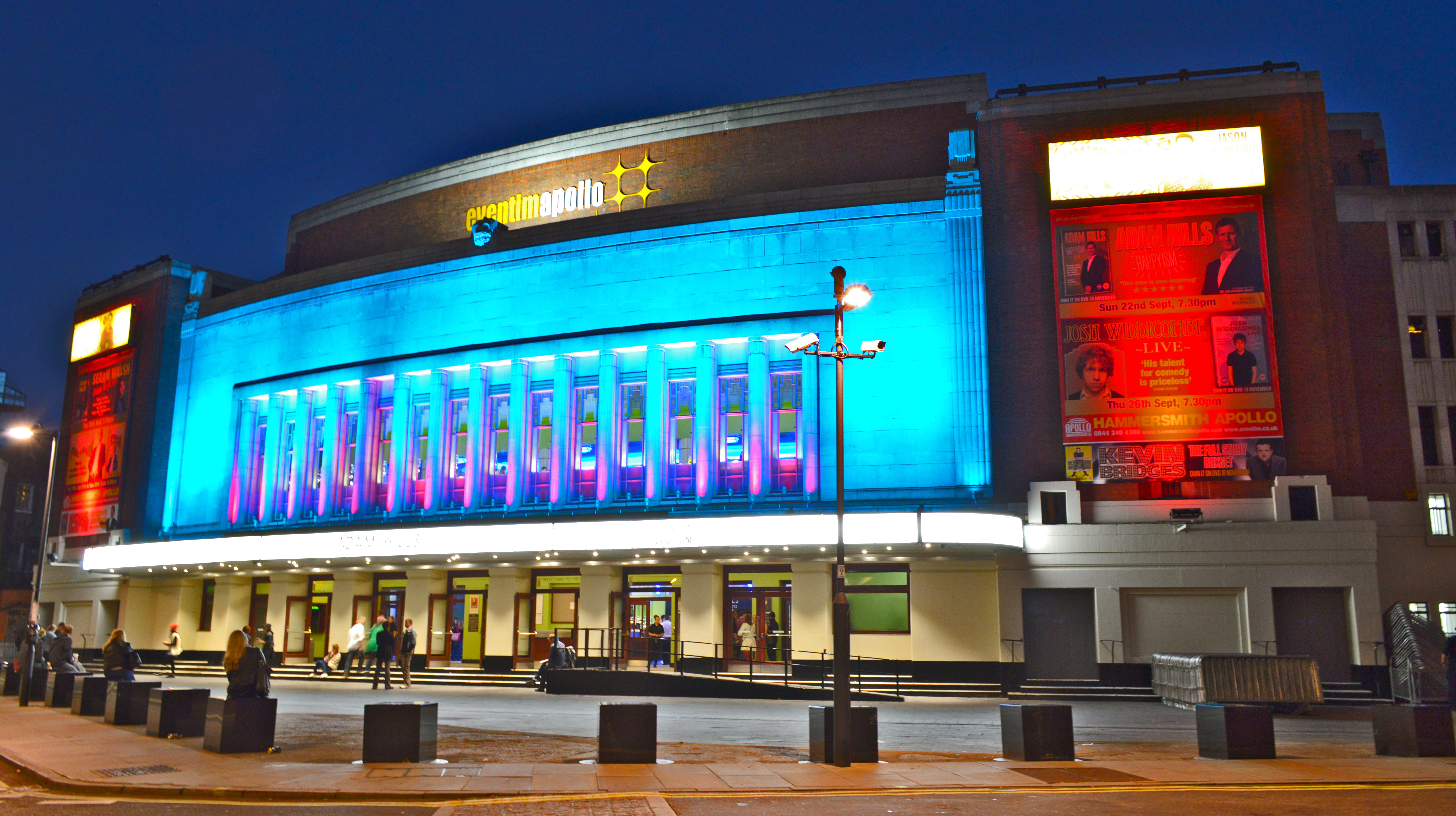
Confirmation came on 3 February 2015 that the concert event would take place at the Eventim Apollo, in Hammersmith, London.[1] This was the first time that London hosted a Eurovision event since the Eurovision Dance Contest 2007.[2]
Organisation
It was announced on 22 October 2014, that the EBU had appointed the British broadcaster BBC to co-produce a special anniversary show to celebrate sixty years of the Eurovision Song Contest, similar to the show Congratulations: 50 Years of the Eurovision Song Contest which took place in 2005. The details regarding the title of the show were unknown at the time the announcement was made.[3][4]
The EBU later issued the following statement regarding the 60th anniversary: "There are various exciting proposals from member broadcasters on the table to celebrate the 60th anniversary beyond the contest in May, which are currently in the final stages of being evaluated. A decision is expected shortly, so stay tuned!".[5] Edgar Böhm, executive producer of the 2015 Eurovision Song Contest said in an interview that the BBC had been chosen to host a special anniversary show.[6] Guy Freeman was appointed as executive producer for the event, assisted by Senior Producer Simon Proctor, the script was co-written by Edward af Sillén, Daniel Réhn, Christine Rose and Simon Proctor whilst the director was Geoff Posner, who had previously directed the Eurovision Song Contest 1998 in Birmingham.[1]
Presenters
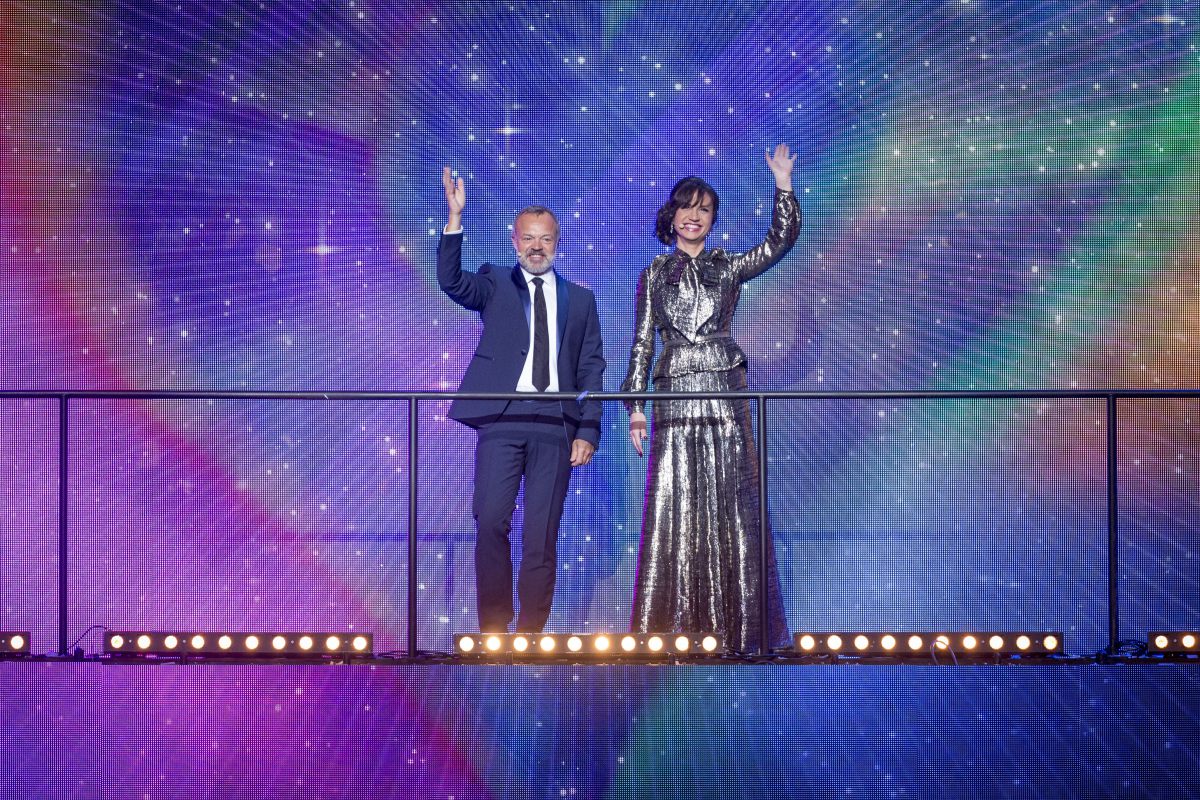
On 3 February 2015, it was announced that Graham Norton and Petra Mede would co-host the concert show.[7] Norton, who co-hosted the Eurovision Dance Contest with Claudia Winkleman in 2007 and 2008,[8] is also the current Eurovision TV commentator for the United Kingdom.[9] Mede was the host of Melodifestivalen 2009 (Swedish national selection show),[10] host of the Eurovision Song Contest 2013[11] and later co-host of the Eurovision Song Contest 2016.[12]
Tickets
Tickets for the anniversary concert went on sale from 10:15 (GMT) on 6 February 2015 via the BBC's Eurovision website and the Eurovision Song Contest's official website.[13]
Programme
The concert was recorded live on 31 March 2015 at the Eventim Apollo, London; allowing participating broadcasters the freedom to air the programme on a date and channel that was convenient for their broadcasting schedules.[14] Fifteen artists, representing thirteen countries, took part in the sixtieth anniversary gala event.[15] The first-ever winner of the contest (in 1956), Lys Assia, appeared in the audience as a guest of honour. During the broadcast, video montages were shown prior to each entry, showing footage for that particular year's contest, ending with Eurovision Song Contest footage for the entry that was about to perform on stage. Recap montages of Eurovision entries over the last sixty years, were also broadcast in-between performances. These sometimes differed between the UK/BBC and non-UK broadcasts because of copyright clearance and were as follows:[16]
- Teach-In – "Ding-a-dong": Netherlands, 1975
- Olivia Newton-John – "Long Live Love": United Kingdom, 1974
- Céline Dion – "Ne partez pas sans moi": Switzerland, 1988
- Jedward – "Lipstick": Ireland, 2011
- ABBA – "Waterloo": Sweden, 1974
- Serebro – "Song#1": Russia, 2007
- Izhar Cohen & the Alphabeta – "A-Ba-Ni-Bi": Israel, 1978
- Kathy Kirby – "I Belong": United Kingdom, 1965
- Bucks Fizz – "Making Your Mind Up": United Kingdom, 1981
- Sonia – "Better the Devil You Know": United Kingdom, 1993
- Imaani – "Where Are You?": United Kingdom, 1998
- Lynsey de Paul & Mike Moran – "Rock Bottom": United Kingdom, 1977
- Michael Ball – "One Step Out of Time": United Kingdom, 1992
- Cliff Richard – "Congratulations": United Kingdom, 1968
- Sandie Shaw – "Puppet on a String": United Kingdom, 1967
- Dana – "All Kinds of Everything": Ireland, 1970
- Sheeba – "Horoscopes": Ireland, 1981
- Amina Annabi – "Le Dernier qui a parlé...": France, 1991
- Roberto Bellarosa – "Love Kills": Belgium, 2013
- Wig Wam – "In My Dreams": Norway, 2005
- Ira Losco – "7th Wonder": Malta, 2002
- Lena – "Satellite": Germany, 2010
- Niamh Kavanagh – "In Your Eyes": Ireland, 1993
- Birthe Kjaer – "Vi maler byen rød": Denmark, 1989
Opening and interval acts
Electro Velvet performed their entry representing the UK at the Eurovision Song Contest 2015, "Still in Love with You". This performance did not appear on the televised show, but was exclusively done for the audience members of the concert hall itself and was later uploaded on the BBC's social media pages and YouTube channel.[17] The interval act for the show was Riverdance.[18] Consisting of traditional Irish music and dance, and featuring Irish dancing champions Jean Butler and Michael Flatley, with a score composed by Limerick native Bill Whelan, it originated as an interval performance during the Eurovision Song Contest 1994.[19][20]
Performances
Fifteen Eurovision acts from thirteen countries participated in the anniversary concert.[15] Although there were originally fourteen acts confirmed by the BBC, it was later announced on 5 March 2015 that Norway's Bobbysocks would join the line-up increasing the total to fifteen.[21] Video montages were shown prior to each entry, showing footage for that particular year's contest, ending with Eurovision Song Contest footage for the entry that was about to perform on stage.[16]

- Notes
- 1.^ Entries performed as a medley.
- 2.^ Winning song of the Eurovision Song Contest 1968, originally performed by Massiel.
- 3.^ One of the winning songs of the Eurovision Song Contest 1969 (along with France, Netherlands, and United Kingdom), and originally performed by Salomé.
- 4.^ Originally performed by Mocedades, finishing in 2nd place at the Eurovision Song Contest 1973.
- 5.^ Johnny Logan wrote the song "Why Me?", which won the Eurovision Song Contest 1992, originally performed by Linda Martin.
Reprise performance
A medley of some of the Eurovision Song Contest's greatest hits were performed in English by all of the participating artists, as a reprise act at the close of the show. Anne-Marie David performed Israel's winning entry in 1979, "Hallelujah". Swedish trio Herreys sang "Nel blu dipinto di blu", which finished in third place at the 1958 contest for Italy's Domenico Modugno. Bucks Fizz's "Making Your Mind Up", the winning entry for the United Kingdom in 1981, was performed by Bobbysocks. The reprise concluded with Conchita Wurst and Dana International leading all of the remaining performers (except Loreen) back on stage to sing ABBA's 1974 winning entry for Sweden, "Waterloo".[16]
Broadcasts
As the anniversary concert show was not broadcast live, the participating national broadcasters were able to broadcast the show on a date and channel that was convenient for their broadcasting schedules. Some broadcasters – such as Austria and Sweden – recorded additional links and interviews in London for their viewers and these were used as previews for the main show.[14]
Commentators
The following countries, listed in order of broadcasting dates, had confirmed that they would broadcast the anniversary show.[15]
| Date of broadcast | Country | Station | Commentators |
|---|---|---|---|
| 3 April 2015 |  Ireland Ireland |
RTÉ2 | No commentary |
 United Kingdom United Kingdom |
BBC One | ||
| 4 April 2015 |  Belgium Belgium |
Eén | Dutch: Peter Van de Veire[23] |
 Iceland Iceland |
RÚV | No commentary | |
 Norway Norway |
NRK1 | ||
 Finland Finland |
Yle Fem | Sarah Dawn Finer and Christer Björkman | |
 Sweden Sweden |
SVT1 and SVT World | ||
| 5 April 2015 |  Albania Albania |
RTSH | No commentary |
 Russia Russia |
C1R | Yury Aksyuta and Svetlana Zeynalova | |
 San Marino San Marino |
SMRTV | No commentary | |
| 11 April 2015 | Finland |
Yle TV2 | No commentary; Finnish subtitles |
 Israel Israel |
Channel 1 | No commentary | |
| 13 April 2015 |  Bulgaria Bulgaria |
BNT1 | |
| 19 April 2015 | BNT2 | ||
| 25 April 2015 |  Latvia Latvia |
LTV1 | Aigars Rozenbergs[24] |
| 26 April 2015 |  Portugal Portugal |
RTP1 | Júlio Isidro |
| 2 May 2015 |  Slovenia Slovenia |
TV SLO 1 | No commentary |
| 4 May 2015 | United Kingdom |
BBC Radio 2 | Graham Norton[25] |
| 12 May 2015 | Belgium |
La Une | French: Jean-Louis Lahaye and Maureen Louys |
| 16 May 2015 | |||
 Denmark Denmark |
DR1 | Ole Tøpholm | |
 Germany Germany |
NDR and MDR | Peter Urban[26][27] | |
 Greece Greece |
NERIT1 and N HD | No commentary; Greek subtitles | |
 Romania Romania |
TVR1 and TVR HD[28] | No commentary | |
| 17 May 2015 |  Austria Austria |
ORF eins[29] | Andi Knoll |
| 19 May 2015 |  Switzerland Switzerland |
SRF zwei (part 1) | German: Sven Epiney |
| 20 May 2015 |  France France |
France 2 | Virginie Guilhaume |
| 21 May 2015 | Switzerland |
SRF zwei (part 2) | German: Sven Epiney |
 Australia Australia |
SBS One | No commentary | |
| 22 May 2015 |  Estonia Estonia |
ETV | |
| Germany |
EinsFestival | Peter Urban[26][27] | |
| 23 May 2015 |  Serbia Serbia |
RTS | No commentary |
 Spain Spain |
La 1[30] | José María Íñigo and Julia Varela[31] | |
Non-broadcasting countries
The following countries declined to broadcast the show:


The following countries, which had participated in the Eurovision Song Contest at least once, had not announced their plans on whether to broadcast the show.[15]
 Andorra
 Azerbaijan
 Belarus
 Bosnia and Herzegovina
 Croatia
 Cyprus
 Georgia
 Hungary
 Italy
Italy Lithuania
 Malta
Malta Moldova
 Monaco
 Montenegro
 Morocco
 Poland
 Slovakia
 Turkey


See also
- Songs of Europe (1981)
- Congratulations: 50 Years of the Eurovision Song Contest (2005)
- Eurovision: Europe Shine a Light (2020)
References
- Roxburgh, Gordon (3 February 2015). "Official: London to host Eurovision's 60th Anniversary Event". eurovision.tv. European Broadcasting Union. Retrieved 3 February 2015.
- BBC Press Office (13 April 2007). "Taking the floor – Eurovision Dance Contest". BBC. Retrieved 23 October 2014.
- Jiandani, Sanjay (3 February 2015). "United Kingdom: BBC will host Eurovision's Greatest Hits Show in March". ESCToday. Retrieved 3 February 2015.
- Granger, Anthony (22 October 2014). "ESC'15: 60th Anniversary Showed To Be BBC Produced". Eurovoix. Retrieved 22 October 2014.
- Jiandani, Sanjay (23 October 2014). "United Kingdom: BBC to produce 60th Anniversary Eurovision show?". ESCToday. Retrieved 23 October 2014.
- Weaver, Jessica (30 January 2015). "United Kingdom: BBC confirmed as 60th anniversary show host?". ESCToday. Retrieved 31 January 2015.
- Martinsson, Anders. "Petra Mede aktuell för Eurovision-jubileum" [Petra Mede current Eurovision anniversary] (in Swedish). Göteborgs Posten. Archived from the original on 20 December 2015. Retrieved 24 October 2014.
- BBC Programming (6 September 2008). "Eurovision Dance Contest 2008". BBC. Retrieved 23 October 2014.
- BBC Press Office (5 December 2008). "Eurovision: Norton to replace Wogan". BBC. Retrieved 23 October 2014.
- Nylén, Susanne; Nikalsson, Ylva (8 February 2009). "Petra Mede fick ledas av scenen" [Petra Mede had to be led off the stage]. Aftonbladet (in Swedish). Retrieved 23 October 2014.
- Siim, Jarmo (28 January 2013). "Petra Mede to host Eurovision 2013". eurovision.tv. European Broadcasting Union. Retrieved 23 October 2014.
- EBU. "Petra Mede and Mans Zelmerlow to host in Stockholm".
- Jiandani, Sanjay (5 February 2015). "United Kingdom: 4 more Eurovision acts join the party!". ESCToday. Retrieved 5 February 2015.
- "Eurovision's Greatest Hits – Ticket FAQ". BBC. 5 February 2015. Retrieved 5 February 2015.
When will the show be broadcast in the UK / my country?
- Storvik-Green, Simon (31 March 2015). "Tonight: Recording of Eurovision's Greatest Hits". eurovision.tv. European Broadcasting Union. Retrieved 1 April 2015.
- Norton, Graham; Mede, Petra (3 April 2015). "Eurovision Song Contest's Greatest Hits". Eurovision Song Contest. London. British Broadcasting Corporation. BBC One. Retrieved 3 April 2015.
- Weaver, Jessica (17 April 2015). "United Kingdom: Watch Electro Velvet's first live performance". ESCToday. Retrieved 12 May 2015.
- Granger, Anthony (22 March 2015). "Eurovision's Greatest Hits: Riverdance to perform". Eurovoix. Retrieved 23 March 2015.
- "Riverdance unveiled". RTÉ. 30 April 1994. Retrieved 23 March 2015.
- "Eurovision Song Contest 1994". eurovision.tv. European Broadcasting Union. Retrieved 23 March 2015.
- Granger, Anthony (5 March 2015). "ESC's Greatest Hits: Bobbysocks to perform". Eurovoix. Retrieved 5 March 2015.
- Freeman, Guy (6 February 2015). "Eurovision's Greatest Hits – full line-up revealed!" (6 February 2015). BBC. Retrieved 6 February 2015.
- "VRT viert 60e verjaardag Songfestival op 4 aprils". deredactie. 26 March 2015. Retrieved 30 March 2015.
- "Latvia: To Broadcast Eurovision's Greatest Hits". Eurovoix. 4 April 2015. Retrieved 4 April 2015.
- "BBC Radio 2 – Eurovision's Greatest Hits Live". BBC.
- "Germany: Will Broadcast Eurovision's Greatest Hits". Eurovoix. 2 April 2015. Retrieved 2 April 2015.
- "Jubiläums-Show: "Eurovision's Greatest Hits" im TV". NDR. 24 April 2015. Archived from the original on 26 April 2015. Retrieved 24 April 2015.
- "Eurovision Song Contest's Greatest Hits – concert Eurovision 60 de ani". TVR.RO. 25 May 2015.
- ORF (4 May 2015). "TV-Fahrplan zum Song Contest" [TV schedule for Song Contest]. ORF (in German). Archived from the original on 8 May 2015. Retrieved 14 May 2015.
- "Edurne, camino a Eurovisión 2015: "Veréis en el escenario de Viena a una mujer con fuerza"". RTVE (in Spanish). 13 May 2015. Retrieved 22 May 2015.
- "Julia Varela acompañará a José María Íñigo como comentarista de TVE para Eurovisión 2015". RTVE (in Spanish). 28 April 2015. Retrieved 30 April 2015.
- Granger, Anthony (5 February 2015). "Armenia: will not broadcast 60th anniversary show". Eurovoix. Retrieved 5 February 2015.
- "Czech Republic: Will Not Broadcast Eurovision's Greatest Hits". Eurovoix. 5 April 2015. Retrieved 5 April 2015.
- Granger, Anthony (4 February 2015). "Luxembourg: will not broadcast 60th anniversary show". Eurovoix. Retrieved 4 February 2015.
- Błażewicz, Maciej (5 February 2015). "MKRTV will not broadcast "Eurovision's Greatest Hits"". ESC Bubble. Retrieved 5 February 2015.
- Granger, Anthony (23 October 2014). "The Netherlands: Will Not Broadcast 60th Anniversary Show". Eurovoix. Retrieved 23 October 2014.
- Granger, Anthony (4 February 2015). "Ukraine: NTU will not broadcast "Eurovision's Greatest Hits"". Eurovoix. Retrieved 4 February 2015.
External links

Eurovision Song Contest | |||||||||||||
|---|---|---|---|---|---|---|---|---|---|---|---|---|---|
| |||||||||||||
| Contests |
| ||||||||||||
| Countries |
| ||||||||||||
| Jurors |
| ||||||||||||
| National selections |
| ||||||||||||
| Other awards |
| ||||||||||||
| Special shows |
| ||||||||||||
| |||||||||||||

На других языках
- [en] Eurovision Song Contest's Greatest Hits
[ru] Eurovision Song Contest’s Greatest Hits
Eurovision Song Contest’s Greatest Hits (русс. Суперхиты Конкурса песни Евровидение) — телевизионная программа, организованная Европейским вещательным союзом (ЕВU) и спродюсированная Британской радиовещательной корпорацией (BBC), в честь шестидесятой годовщины Конкурса песни Евровидение. Она состоялась 31 марта 2015 года в Эвентим Аполло (англ. Eventim Apollo (англ.) (рус.), Хаммерсмит, Лондон.[1] В юбилейном шоу приняли участие пятьдесят конкурсантов Евровидения прошлых лет из тринадцати стран.Другой контент может иметь иную лицензию. Перед использованием материалов сайта WikiSort.org внимательно изучите правила лицензирования конкретных элементов наполнения сайта.
WikiSort.org - проект по пересортировке и дополнению контента Википедии