music.wikisort.org - Composition
The Eurovision Song Contest 2014 was the 59th edition of the Eurovision Song Contest. It took place in Copenhagen, Denmark, following the country's victory at the 2013 contest with the song "Only Teardrops" by Emmelie de Forest. Organised by the European Broadcasting Union (EBU) and host broadcaster Danish Broadcasting Corporation (DR), the contest was held at B&W Hallerne,[9] and consisted of two semi-finals on 6 and 8 May, and a final on 10 May 2014.[10] The three live shows were presented by Danish television presenter Lise Rønne, musician Nikolaj Koppel and actor Pilou Asbæk.[11]
| Eurovision Song Contest 2014 | |
|---|---|
| #JoinUs | |
 | |
| Dates | |
| Semi-final 1 | 6 May 2014 |
| Semi-final 2 | 8 May 2014 |
| Final | 10 May 2014 |
| Host | |
| Venue | B&W Hallerne Copenhagen, Denmark |
| Presenter(s) |
|
| Directed by | Per Zachariassen |
| Executive supervisor | Jon Ola Sand[1] |
| Executive producer | Pernille Gaardbo |
| Host broadcaster | Danish Broadcasting Corporation (DR) |
| Opening act |
|
| Interval act |
|
| Website | eurovision |
| Participants | |
| Number of entries | 37 |
| Debuting countries | None |
| Returning countries |
|
| Non-returning countries |
|
Participation map
| |
| Vote | |
| Voting system | Each country awarded 12, 10, 8–1 points to their 10 favourite songs. |
| Nul points in final | None |
| Winning song |
|


Thirty-seven countries participated in the contest; this included the return of Poland and Portugal after absences of two years and one year respectively. Overall, there were two fewer countries competing compared to the previous year, making thirty-seven participants, the smallest number since 2006. Bulgaria, Croatia, Cyprus and Serbia announced that they would not be taking part.
The winner was Austria with the song "Rise Like a Phoenix", performed by Conchita Wurst and written by Charley Mason, Joey Patulka, Ali Zuckowski, and Julian Maas.[12] Austria's victory was the longest gap between victories for any country at the time - 48 years, not having won since 1966. The Netherlands, Sweden, Armenia and Hungary rounded out the top five, with the Netherlands achieving their best result since their victory in 1975, Hungary achieving their best result since their fourth place in 1994, and Armenia equalling their best result from 2008. Of the "Big Five" countries, only Spain achieved a place in the top ten, while France finished in last place for the first time in their Eurovision history. Meanwhile, San Marino and Montenegro both qualified for the final for the first time.
A new record of 195 million viewers for the contest was reported.[1]
The official compilation album of the 2014 contest was released by Universal Music Group on 14 April 2014, and featured all 37 songs from the contest, including the official #JoinUs theme performed during the interval act of the final. The host broadcaster, DR, and the EBU won the International TV Award at the Ondas Awards for their production of the contest. The show organisers from Copenhagen spent in total 112 million Danish kroner on the contest; three times more than what was expected and were furthermore highly accused of cases of nepotism within the organisation.[13]
Location
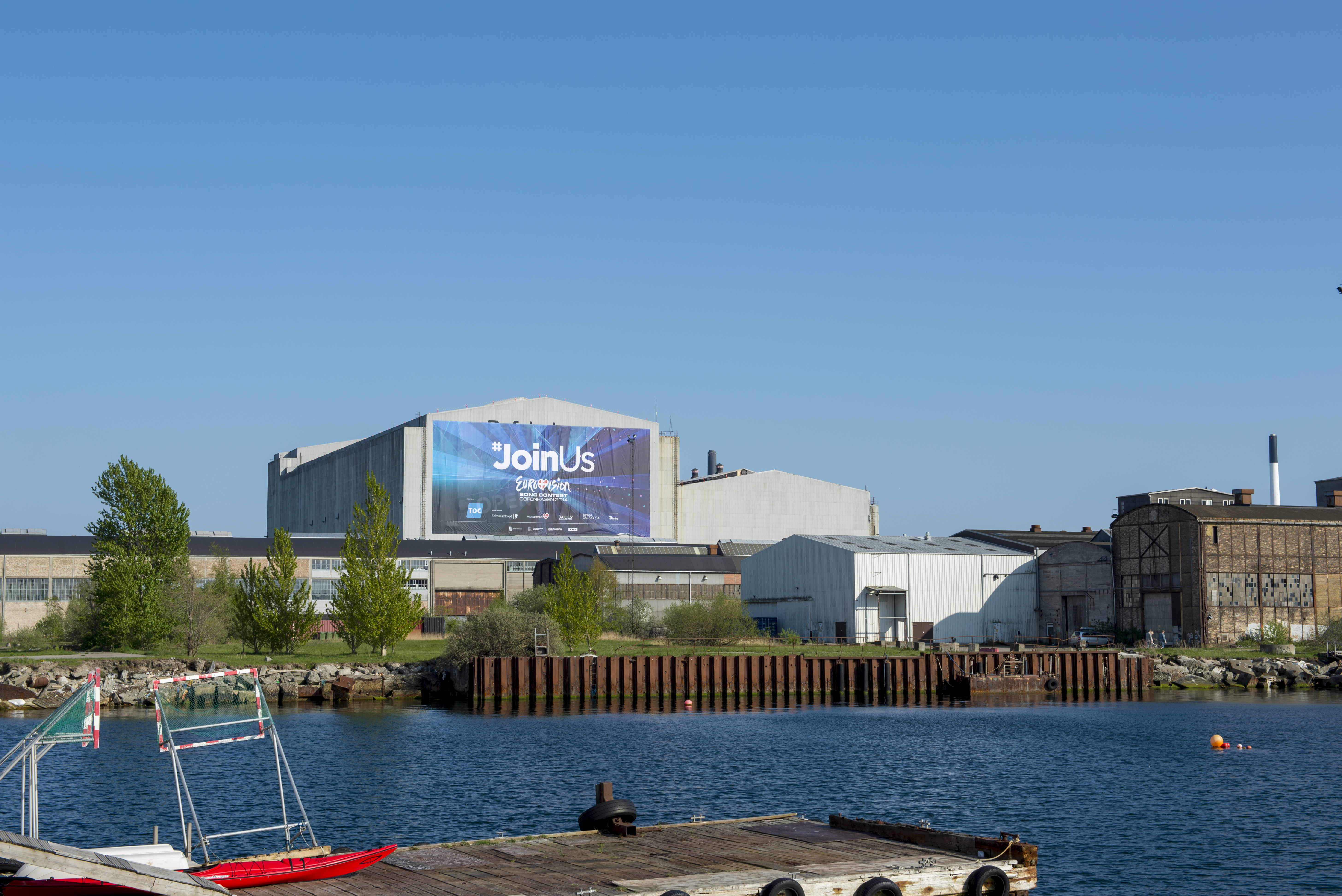
The contest was held at the former shipyard Refshaleøen, in the B&W Hallerne in Copenhagen, with the social networking hashtag "#JoinUs" as the motto. The location had been refurbished to accommodate the event, with the surrounding area transformed into "Eurovision Island"—an Olympic Park-inspired complex housing the event venue, press centre, and other amenities.[9]
The mayor of Copenhagen, Frank Jensen, declared in late August that the city would contribute to the budget with 40 million (Danish Kroner) (€5.36 million). He also announced that the aim was to make the Eurovision 2014 into the greenest contest to date since Copenhagen had been elected European Green Capital for 2014.[14]
Bidding phase
Five cities had been considered as host city of the contest, including Herning and Copenhagen, both favourites to be the next host.[15] The Parken Stadium, located in Copenhagen, which hosted the 2001 contest and Jyske Bank Boxen in Herning, which hosted the Dansk Melodi Grand Prix 2013 final, were the first venues to join the bidding phase.[16] Later, Fredericia and Aalborg entered the phase with the Messe C and Gigantium venues, respectively.[17][18] The fifth city to join the phase was Horsens, with the venue being the courtyard of the former Horsens State Prison. In the event that Horsens had been chosen to host the contest, the courtyard would have been covered by a permanent glass roof.[19][20] The contest was provisionally set to take place on 13, 15 and 17 May 2014, however, the dates were later brought forward a week in order to accommodate the candidate cities.[10]
On 17 June 2013, the municipality executive of Aalborg decided not to bid for hosting the contest due to the city's lack of sufficient hotel capacity. While DR required the host city to have at least 3,000 hotel rooms, the city of Aalborg had only 1,600 hotel rooms, more than half of which had been booked for other events taking place at the same time as the Eurovision Song Contest.[21][22] On 18 June 2013, DR announced that formal bids on hosting the contest had been received by the municipalities of Copenhagen, Herning and Horsens, and that the Municipality of Fredericia had confirmed its intention to place a formal bid, too.[23]
On 19 June 2013, the deadline for placing bids on hosting the contest,[22] it was reported that Wonderful Copenhagen, the official convention, event and visitors bureau of the Greater Copenhagen area, had proposed three venues in its bid on hosting the contest: The Parken Stadium, a large tent on the grounds of DR Byen and the B&W Hallerne.[24][25] On 25 June 2013, the Municipality of Fredericia announced that the Triangle Region had withdrawn its bid on hosting the contest, due to the lack of a suitable venue. DR required the hosting venue to have no pillars blocking any views and an interior height of at least 16 metres. However, no venues in the region met those requirements and, therefore, Fredericia was no longer in the running for becoming host city of the 2014 Eurovision Song Contest.[26] On 28 June 2013, Anders Hørsholt, CEO of Parken Sport & Entertainment, stated that the Parken Stadium was no longer in the running for hosting the contest due to several football matches having already been scheduled to take place at the stadium in the weeks leading up to the contest.[27]
On 2 September 2013, the Danish broadcaster DR announced that it had chosen Copenhagen as the host city for the 2014 contest, with B&W Hallerne chosen as the host venue.


Key
 Host venue
| City | Venue | Notes |
|---|---|---|
| Aalborg | Gigantium | Hosted Dansk Melodi Grand Prix in 2006, 2010 and 2012. Withdrew on 17 June 2013.[28] |
| Copenhagen | A large tent on the grounds of DR Byen | — |
| B&W Hallerne [29] |
— | |
| Parken Stadium | Hosted the Eurovision Song Contest 2001. Withdrew on 28 June 2013.[27] | |
| Fredericia | Messe C | Withdrew on 26 June 2013.[30] |
| Herning | Jyske Bank Boxen | Hosted the final of Dansk Melodi Grand Prix 2013 |
| Horsens | Fængslet | — |
Other sites
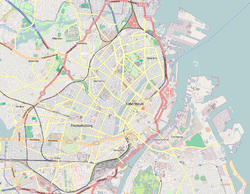


The Eurovision Village was the official Eurovision Song Contest fan and sponsors' area during the events week. There it was possible to watch performances by local artists, as well as the live shows broadcast from the main venue. Located at the Nytorv Square, it was open from 4 to 11 May 2014.[31]
The EuroClub was the venue for the official after-parties and private performances by contest participants. Unlike the Eurovision Village, access to the EuroClub was restricted to accredited fans, delegates, and press. It was located at VEGA CPH Music Club.[32]
The "Red Carpet" event, where the contestants and their delegations are presented before the accredited press and fans, took place at Copenhagen City Hall on 4 May 2014 at 17:00 CET, followed by the Opening Ceremony.[33]
Format


The competition consisted of two semi-finals and a final, a format which has been in use since 2008. The ten countries with the highest scores in each semi-final qualified to the final where they joined the host nation Denmark and the five main sponsoring nations (known as the Big Five): France, Germany, Italy, Spain and the United Kingdom.
Each participating country had their own national jury, which consisted of five professional members of the music industry. Each member of a respective nation's jury was required to rank every song, except that of their own country. The voting results from each member of a particular nation's jury were combined to produce an overall ranking from first to last place. Likewise, the televoting results were also interpreted as a full ranking, taking into account the full televoting result rather than just the top ten. The combination of the jury's full ranking and the televote's full ranking produced an overall ranking of all competing entries. The song which scored the highest overall rank received 12 points, while the tenth-best ranked song received 1-point.[34] In the event of a televoting (insufficient number of votes/technical issues) or jury failure (technical issue/breach of rules), only a jury/televoting was used by each country.[35][36]
On 20 September 2013, the EBU released the official rules for the 2014 contest, which introduced rule changes regarding the jury voting.[37] The rules aimed at providing more transparency regarding each five member national jury by releasing the names of all jurors on 1 May 2014 prior to the start of the contest and providing each juror's full ranking results after the conclusion of the contest. In addition, jury members on a particular nation's jury can only serve as a juror if they have not already participated as such in one of the preceding two contest editions.[38]
Semi-final allocation draw
The draw that determined the semi-final allocation was held on 20 January 2014 at the Copenhagen City Hall.[39] Prior to the allocation draw, on 24 November 2013 it was announced that Norway and Sweden would perform in different semi-finals in order to maximise the availability of tickets for visitors from both countries. A draw at the EBU headquarters determined that Sweden would perform in the first semi-final, while Norway would perform in the second semi-final.[40] The EBU also allocated Israel to the second semi-final after a request from the delegation in order to avoid complications with its Independence Day coinciding with the date of the first semi-final.[41] The remaining participating countries, excluding the automatic finalists (Denmark, France, Germany, Italy, Spain and the United Kingdom), were split into six pots, based on voting patterns from the previous ten years.[42]
The pots were calculated by the televoting partner Digame and were as follows:[43]
| Pot 1 | Pot 2 | Pot 3 | Pot 4 | Pot 5 | Pot 6 |
|---|---|---|---|---|---|
|
|
|
|
|
|
Running order
As in 2013, the host broadcaster DR and their producers determined the running order for each show with only the starting position of the host nation being determined by draw.[44] A draw which took place during the heads of delegation meeting on 17 March 2014 in Copenhagen determined that Denmark would perform 23rd in the final.[45] On 24 March 2014, the running order for the two semi-finals was released.[46] Prior to the creation of the running order for the final, an allocation draw was held during the semi-final winners press conferences following the conclusion of each semi-final and during the individual press conferences on 6 May 2014 for the Big Five (France, Germany, Italy, Spain and the United Kingdom). The draw determined whether the country would perform in the first or second half of the final. The producers published the final running order shortly before 02:00 (CEST) on 9 May 2014. Ukraine were chosen to perform first, whilst the United Kingdom were chosen to perform last.[47]
Crimea
The contest was held in the immediate aftermath of the 2014 Ukrainian revolution and subsequent annexation of Crimea by Russia. Votes cast through Ukrainian telecom providers which service Crimea were counted towards Ukraine's votes.[48]
Graphic design
The graphic design of the contest was revealed by the EBU on 18 December 2013. The theme art comprises a blue and purple diamond, within it the generic Eurovision Song Contest logo featuring the Danish flag as well as the hashtag and slogan "#JoinUs" at the centre of the diamond.[49]
The postcards used to introduce a country and their participants were shot in their respective countries and featured the artists using unique ways to create their country's flag, e.g. the postcard for the United Kingdom features Molly creating the Union Flag from AEC Routemaster buses, Royal Mail vans, and people wearing blue raincoats along with strips of red and white paper, and the postcard for Denmark features Basim and his singers using old furniture and red and white paint to paint the Danish flag.[50] The postcards then ended with the act taking a picture on a camera or phone and a close up of the resulting artwork was shown onscreen. The flag created by the artist(s) is then captured into a diamond and transitions to the official flag.
National host broadcaster
Pernille Gaardbo was appointed by DR's Director-General Maria Rørbye Rønn as the executive producer for the contest, three-days after Denmark's victory at the 2013 contest.[51] Maria Rørbye Rønn stated in an interview that "By choosing Pernille Gaardbo, we have a person who has all the necessary leadership skills, which are essential in order to run a project of this magnitude, and the technical insight for such a large TV-production, which the Eurovision Song Contest is".[51] Gaardbo has worked for the host broadcaster for 17 years, 12 of which was in the role of supervisor of the DR Medieservice.[51]
Danish royal family members Crown Prince Frederik and Crown Princess Mary attended the final as invited guests.[52][53] In March 2014, host broadcaster DR invited Jessica Mauboy to perform during the interval act of the second semi-final on 8 May 2014, part of DR's recognition of Australia's dedication to the contest.[54] Mauboy performed the song "Sea of Flags" during the interval act.[5]
Participating countries

Thirty-seven countries participated in the 2014 contest. Poland and Portugal both returned to the contest, having last participated in 2011 and 2012 respectively.[55][56] However, Bulgaria broadcaster Bulgarian National Television (BNT),[57] Croatia broadcaster Hrvatska radiotelevizija (HRT),[58] Cyprus broadcaster Cyprus Broadcasting Corporation (CyBC)[59] and Serbia broadcaster Radio Television of Serbia (RTS)[60] did not participate in the 2014 contest.
Returning artists
Valentina Monetta represented San Marino for a third and final consecutive year, having previously represented the microstate at the 2012 and 2013 contests.[61] This makes Monetta the fourth main singer to compete in three consecutive contests (and the only one of amongst them never to win in one of these occasions), following Lys Assia and Corry Brokken, who both competed in the 1956, 1957 and 1958 contests, and Udo Jürgens, who competed in 1964, 1965 and 1966.
Paula Seling and Ovi returned as a duo, having previously represented Romania in 2010.[62]
The Tolmachevy Sisters, who represented Russia, previously participated in and won the Junior Eurovision Song Contest 2006.
Macedonian backing vocalist Tamara Todevska previously represented Macedonia in 2008.[63] She would later represent Macedonia again in the Eurovision Song Contest 2019.
Martina Majerle, who represented Slovenia in 2009 and provided backing vocals numerous times for Croatia (2003), Montenegro (2008) and Slovenia (2007, 2011, 2012), returned as a backing vocalist for Montenegro.[64]
Semi-final 1
Spain, France, and Denmark voted in this semi-final.[65]
| R/O[46] | Country[43] | Artist | Song | Language | Points | Place[66] |
|---|---|---|---|---|---|---|
| 1 |  Armenia Armenia |
Aram Mp3 | "Not Alone" | English | 121 | 4 |
| 2 |  Latvia Latvia |
Aarzemnieki | "Cake to Bake" | English[lower-alpha 1] | 33 | 13 |
| 3 |  Estonia Estonia |
Tanja | "Amazing" | English | 36 | 12 |
| 4 |  Sweden Sweden |
Sanna Nielsen | "Undo" | English | 131 | 2 |
| 5 |  Iceland Iceland |
Pollapönk | "No Prejudice" | English | 61 | 8 |
| 6 |  Albania Albania |
Hersi | "One Night's Anger" | English | 22 | 15 |
| 7 |  Russia Russia |
Tolmachevy Sisters | "Shine" | English | 63 | 6 |
| 8 |  Azerbaijan Azerbaijan |
Dilara Kazimova | "Start a Fire" | English | 57 | 9 |
| 9 |  Ukraine Ukraine |
Mariya Yaremchuk | "Tick-Tock" | English | 118 | 5 |
| 10 |  Belgium Belgium |
Axel Hirsoux | "Mother" | English | 28 | 14 |
| 11 |  Moldova Moldova |
Cristina Scarlat | "Wild Soul" | English | 13 | 16 |
| 12 |  San Marino San Marino |
Valentina Monetta | "Maybe" | English | 40 | 10 |
| 13 |  Portugal Portugal |
Suzy | "Quero ser tua" | Portuguese | 39 | 11 |
| 14 |  Netherlands Netherlands |
The Common Linnets | "Calm After the Storm" | English | 150 | 1 |
| 15 |  Montenegro Montenegro |
Sergej Ćetković | "Moj svijet" (Мој свијет) | Montenegrin | 63 | 7 |
| 16 |  Hungary Hungary |
András Kállay-Saunders | "Running" | English | 127 | 3 |
Semi-final 2
Germany, Italy, and the United Kingdom voted in this semi-final.[65]
| R/O[46] | Country[43] | Artist | Song | Language | Points | Place[67] |
|---|---|---|---|---|---|---|
| 1 |  Malta Malta |
Firelight | "Coming Home" | English | 63 | 9 |
| 2 |  Israel Israel |
Mei Finegold | "Same Heart" | English, Hebrew | 19 | 14 |
| 3 |  Norway Norway |
Carl Espen | "Silent Storm" | English | 77 | 6 |
| 4 |  Georgia Georgia |
The Shin and Mariko | "Three Minutes to Earth" | English | 15 | 15 |
| 5 |  Poland Poland |
Donatan and Cleo | "My Słowianie – We Are Slavic" | Polish, English | 70 | 8 |
| 6 |  Austria Austria |
Conchita Wurst | "Rise Like a Phoenix" | English | 169 | 1 |
| 7 |  Lithuania Lithuania |
Vilija | "Attention" | English | 36 | 11 |
| 8 |  Finland Finland |
Softengine | "Something Better" | English | 97 | 3 |
| 9 |  Ireland Ireland |
Can-linn feat. Kasey Smith | "Heartbeat" | English | 35 | 12 |
| 10 |  Belarus Belarus |
Teo | "Cheesecake" | English | 87 | 5 |
| 11 |  Macedonia Macedonia |
Tijana | "To the Sky" | English | 33 | 13 |
| 12 |  Switzerland Switzerland |
Sebalter | "Hunter of Stars" | English | 92 | 4 |
| 13 |  Greece Greece |
Freaky Fortune feat. RiskyKidd | "Rise Up" | English | 74 | 7 |
| 14 |  Slovenia Slovenia |
Tinkara Kovač | "Round and Round" | English, Slovene | 52 | 10 |
| 15 |  Romania Romania |
Paula Seling and Ovi | "Miracle" | English | 125 | 2 |
Final
As in the 2013 contest, the winner was announced as soon as it was mathematically impossible to catch up. In this case, the winner had been determined by the 34th vote out of the 37, which came from Ukraine.
| R/O[47] | Country[43] | Artist | Song | Language | Points | Place[68] |
|---|---|---|---|---|---|---|
| 1 | Ukraine |
Mariya Yaremchuk | "Tick-Tock" | English | 113 | 6 |
| 2 | Belarus |
Teo | "Cheesecake" | English | 43 | 16 |
| 3 | Azerbaijan |
Dilara Kazimova | "Start a Fire" | English | 33 | 22 |
| 4 | Iceland |
Pollapönk | "No Prejudice" | English | 58 | 15 |
| 5 | Norway |
Carl Espen | "Silent Storm" | English | 88 | 8 |
| 6 | Romania |
Paula Seling and Ovi | "Miracle" | English | 72 | 12 |
| 7 | Armenia |
Aram Mp3 | "Not Alone" | English | 174 | 4 |
| 8 | Montenegro |
Sergej Ćetković | "Moj svijet" (Мој свијет) | Montenegrin | 37 | 19 |
| 9 | Poland |
Donatan and Cleo | "My Słowianie – We Are Slavic" | Polish, English | 62 | 14 |
| 10 | Greece |
Freaky Fortune feat. RiskyKidd | "Rise Up" | English | 35 | 20 |
| 11 | Austria |
Conchita Wurst | "Rise Like a Phoenix" | English | 290 | 1 |
| 12 |  Germany Germany |
Elaiza | "Is It Right" | English | 39 | 18 |
| 13 | Sweden |
Sanna Nielsen | "Undo" | English | 218 | 3 |
| 14 |  France France |
Twin Twin | "Moustache" | French[lower-alpha 2] | 2 | 26 |
| 15 | Russia |
Tolmachevy Sisters | "Shine" | English | 89 | 7 |
| 16 |  Italy Italy |
Emma | "La mia città" | Italian[lower-alpha 3] | 33 | 21 |
| 17 | Slovenia |
Tinkara Kovač | "Round and Round" | English, Slovene | 9 | 25 |
| 18 | Finland |
Softengine | "Something Better" | English | 72 | 11 |
| 19 |  Spain Spain |
Ruth Lorenzo | "Dancing in the Rain" | English, Spanish | 74 | 10 |
| 20 | Switzerland |
Sebalter | "Hunter of Stars" | English | 64 | 13 |
| 21 | Hungary |
András Kállay-Saunders | "Running" | English | 143 | 5 |
| 22 | Malta |
Firelight | "Coming Home" | English | 32 | 23 |
| 23 |  Denmark Denmark |
Basim | "Cliche Love Song" | English | 74 | 9 |
| 24 | Netherlands |
The Common Linnets | "Calm After the Storm" | English | 238 | 2 |
| 25 | San Marino |
Valentina Monetta | "Maybe" | English | 14 | 24 |
| 26 |  United Kingdom United Kingdom |
Molly | "Children of the Universe" | English | 40 | 17 |
Detailed voting results
Full results including televoting and results from the individual jury members were released shortly after the final.[69]
Semi-final 1
Albania, Montenegro, San Marino and Moldova used juries due to an inability to provide televoting results.[70]
| Place | Combined | Jury | Televoting | |||
|---|---|---|---|---|---|---|
| Country | Points | Country | Points | Country | Points | |
| 1 | Netherlands |
150 | Netherlands |
130 | Netherlands |
147 |
| 2 | Sweden |
131 | Sweden |
125 | Hungary |
125 |
| 3 | Hungary |
127 | Hungary |
122 | Sweden |
122 |
| 4 | Armenia |
121 | Armenia |
102 | Armenia |
121 |
| 5 | Ukraine |
118 | Azerbaijan |
94 | Ukraine |
119 |
| 6 | Russia |
63[lower-alpha 4] | Ukraine |
88 | Russia |
73 |
| 7 | Montenegro |
63[lower-alpha 4] | Montenegro |
74 | Portugal |
72 |
| 8 | Iceland |
61 | Iceland |
68 | San Marino |
58 |
| 9 | Azerbaijan |
57 | Albania |
64 | Iceland |
50 |
| 10 | San Marino |
40 | Estonia |
61 | Montenegro |
43 |
| 11 | Portugal |
39 | Russia |
57 | Belgium |
41 |
| 12 | Estonia |
36 | Latvia |
27 | Azerbaijan |
41 |
| 13 | Latvia |
33 | San Marino |
25 | Latvia |
40 |
| 14 | Belgium |
28 | Belgium |
24 | Albania |
23 |
| 15 | Albania |
22 | Moldova |
24 | Moldova |
14 |
| 16 | Moldova |
13 | Portugal |
17 | Estonia |
13 |
| Voting procedure used: 50% jury and televote 100% jury vote |
||||||||||||||||||||
| Armenia | 121 | 6 | 5 | 8 | 3 | 5 | 12 | 12 | 3 | 10 | 4 | 12 | 10 | 8 | 5 | 12 | 6 | |||
|---|---|---|---|---|---|---|---|---|---|---|---|---|---|---|---|---|---|---|---|---|
| Latvia | 33 | 6 | 1 | 6 | 7 | 5 | 2 | 3 | 2 | 1 | ||||||||||
| Estonia | 36 | 5 | 10 | 5 | 5 | 5 | 4 | 2 | ||||||||||||
| Sweden | 131 | 4 | 8 | 7 | 10 | 6 | 6 | 10 | 8 | 10 | 3 | 8 | 8 | 5 | 10 | 10 | 6 | 12 | ||
| Iceland | 61 | 5 | 2 | 7 | 3 | 4 | 7 | 1 | 7 | 6 | 8 | 8 | 3 | |||||||
| Albania | 22 | 2 | 5 | 1 | 12 | 2 | ||||||||||||||
| Russia | 63 | 7 | 4 | 1 | 2 | 2 | 10 | 6 | 1 | 12 | 5 | 4 | 5 | 4 | ||||||
| Azerbaijan | 57 | 2 | 4 | 1 | 7 | 10 | 5 | 6 | 6 | 2 | 4 | 7 | 1 | 2 | ||||||
| Ukraine | 118 | 12 | 7 | 10 | 6 | 7 | 3 | 7 | 12 | 7 | 8 | 4 | 7 | 5 | 8 | 3 | 7 | 5 | ||
| Belgium | 28 | 6 | 4 | 4 | 7 | 1 | 3 | 2 | 1 | |||||||||||
| Moldova | 13 | 4 | 1 | 2 | 6 | |||||||||||||||
| San Marino | 40 | 2 | 1 | 3 | 4 | 8 | 3 | 6 | 4 | 1 | 7 | 1 | ||||||||
| Portugal | 39 | 3 | 4 | 1 | 1 | 6 | 3 | 2 | 3 | 3 | 5 | 8 | ||||||||
| Netherlands | 150 | 10 | 12 | 12 | 12 | 12 | 2 | 2 | 3 | 7 | 10 | 2 | 12 | 12 | 1 | 12 | 12 | 10 | 7 | |
| Montenegro | 63 | 8 | 3 | 12 | 5 | 2 | 1 | 5 | 6 | 6 | 4 | 7 | 4 | |||||||
| Hungary | 127 | 1 | 3 | 8 | 10 | 8 | 10 | 8 | 8 | 8 | 12 | 4 | 8 | 10 | 10 | 6 | 3 | 10 | ||
12 points
Below is a summary of the maximum 12 points each country awarded to another in the first semifinal:
| N. | Contestant | Nation(s) giving 12 points |
|---|---|---|
| 8 | Netherlands | Denmark, Estonia, Hungary, Iceland, Latvia, Portugal, San Marino, Sweden |
| 4 | Armenia | France, Netherlands, Russia, Ukraine |
| 2 | Ukraine | Armenia, Azerbaijan |
| 1 | Sweden | Spain |
| Albania | Montenegro | |
| Russia | Moldova | |
| Montenegro | Albania | |
| Hungary | Belgium |
Semi-final 2
Georgia and Macedonia used juries due to either technical issues with the televoting or an insufficient number of votes cast during the televote period.[73]
| Place | Combined | Jury | Televoting | |||
|---|---|---|---|---|---|---|
| Country | Points | Country | Points | Country | Points | |
| 1 | Austria |
169 | Austria |
138 | Austria |
165 |
| 2 | Romania |
125 | Finland |
117 | Romania |
126 |
| 3 | Finland |
97 | Malta |
113 | Poland |
116 |
| 4 | Switzerland |
92 | Norway |
100 | Switzerland |
98 |
| 5 | Belarus |
87 | Romania |
99 | Greece |
91 |
| 6 | Norway |
77 | Belarus |
71 | Belarus |
86 |
| 7 | Greece |
74 | Macedonia |
70 | Finland |
63 |
| 8 | Poland |
70 | Slovenia |
60 | Norway |
55 |
| 9 | Malta |
63 | Greece |
52 | Slovenia |
48 |
| 10 | Slovenia |
52 | Switzerland |
51 | Ireland |
47 |
| 11 | Lithuania |
36 | Lithuania |
41 | Lithuania |
44 |
| 12 | Ireland |
35 | Poland |
34 | Malta |
36 |
| 13 | Macedonia |
33 | Georgia |
33 | Israel |
28 |
| 14 | Israel |
19 | Ireland |
33 | Macedonia |
26 |
| 15 | Georgia |
15 | Israel |
32 | Georgia |
15 |
| Voting procedure used: 50% jury and televote 100% jury vote |
|||||||||||||||||||
| Malta | 63 | 2 | 8 | 4 | 1 | 1 | 5 | 3 | 4 | 12 | 5 | 3 | 3 | 5 | 7 | ||||
|---|---|---|---|---|---|---|---|---|---|---|---|---|---|---|---|---|---|---|---|
| Israel | 19 | 3 | 2 | 5 | 6 | 1 | 2 | ||||||||||||
| Norway | 77 | 7 | 5 | 6 | 5 | 8 | 10 | 8 | 4 | 2 | 7 | 4 | 4 | 7 | |||||
| Georgia | 15 | 2 | 6 | 5 | 1 | 1 | |||||||||||||
| Poland | 70 | 1 | 4 | 7 | 2 | 4 | 2 | 10 | 3 | 3 | 3 | 5 | 12 | 10 | 4 | ||||
| Austria | 169 | 10 | 10 | 8 | 10 | 10 | 10 | 12 | 12 | 7 | 6 | 12 | 12 | 10 | 12 | 4 | 12 | 12 | |
| Lithuania | 36 | 5 | 7 | 2 | 5 | 6 | 1 | 10 | |||||||||||
| Finland | 97 | 3 | 12 | 1 | 8 | 8 | 5 | 10 | 10 | 8 | 4 | 2 | 5 | 5 | 8 | 8 | |||
| Ireland | 35 | 4 | 1 | 3 | 5 | 4 | 7 | 1 | 2 | 1 | 2 | 5 | |||||||
| Belarus | 87 | 6 | 7 | 1 | 12 | 7 | 10 | 12 | 7 | 1 | 2 | 8 | 6 | 8 | |||||
| Macedonia | 33 | 3 | 2 | 2 | 1 | 1 | 10 | 12 | 2 | ||||||||||
| Switzerland | 92 | 5 | 5 | 12 | 6 | 7 | 8 | 6 | 3 | 1 | 5 | 8 | 10 | 10 | 3 | 3 | |||
| Greece | 74 | 8 | 6 | 6 | 3 | 1 | 3 | 4 | 4 | 12 | 4 | 3 | 7 | 6 | 6 | 1 | |||
| Slovenia | 52 | 8 | 4 | 4 | 3 | 7 | 3 | 2 | 6 | 6 | 7 | 2 | |||||||
| Romania | 125 | 12 | 12 | 10 | 6 | 12 | 2 | 6 | 7 | 8 | 8 | 7 | 10 | 7 | 8 | 4 | 6 | ||
12 points
Below is a summary of the maximum 12 points each country awarded to another in the second semifinal:
| N. | Contestant | Nation(s) giving 12 points |
|---|---|---|
| 7 | Austria | Finland, Greece, Ireland, Italy, Romania, Switzerland, United Kingdom |
| 3 | Romania | Austria, Israel, Malta |
| 2 | Belarus | Georgia, Lithuania |
| 1 | Malta | Macedonia |
| Poland | Germany | |
| Finland | Norway | |
| Macedonia | Slovenia | |
| Switzerland | Poland | |
| Greece | Belarus |
Final
| Place | Combined | Jury | Televoting | |||
|---|---|---|---|---|---|---|
| Country | Points | Country | Points | Country | Points | |
| 1 | Austria |
290 | Austria |
224 | Austria |
311 |
| 2 | Netherlands |
238 | Sweden |
201 | Netherlands |
222 |
| 3 | Sweden |
218 | Netherlands |
200 | Armenia |
193 |
| 4 | Armenia |
174 | Hungary |
138 | Sweden |
190 |
| 5 | Hungary |
143 | Armenia |
125 | Poland |
162 |
| 6 | Ukraine |
113 | Malta |
119 | Russia |
132 |
| 7 | Russia |
89 | Finland |
114 | Switzerland |
114 |
| 8 | Norway |
88 | Azerbaijan |
108 | Ukraine |
112 |
| 9 | Denmark |
74[lower-alpha 5] | Norway |
102 | Romania |
103 |
| 10 | Spain |
74[lower-alpha 5] | Denmark |
85 | Hungary |
98 |
| 11 | Finland |
72[lower-alpha 6] | Spain |
83 | Belarus |
56 |
| 12 | Romania |
72[lower-alpha 6] | Ukraine |
78 | Iceland |
46 |
| 13 | Switzerland |
64 | Russia |
70 | Denmark |
43[lower-alpha 7] |
| 14 | Poland |
62 | Germany |
61 | Greece |
43[lower-alpha 7] |
| 15 | Iceland |
58 | Iceland |
59 | Spain |
41 |
| 16 | Belarus |
43 | United Kingdom |
52 | Norway |
39 |
| 17 | United Kingdom |
40 | Romania |
51 | Finland |
39 |
| 18 | Germany |
39 | Belarus |
50 | Montenegro |
33 |
| 19 | Montenegro |
37 | Greece |
49 | Italy |
32 |
| 20 | Greece |
35 | Montenegro |
48 | Germany |
31 |
| 21 | Italy |
33[lower-alpha 8] | Italy |
37 | United Kingdom |
29 |
| 22 | Azerbaijan |
33[lower-alpha 8] | Switzerland |
27 | Azerbaijan |
26 |
| 23 | Malta |
32 | Poland |
23 | San Marino |
18 |
| 24 | San Marino |
14 | Slovenia |
21 | Malta |
17 |
| 25 | Slovenia |
9 | San Marino |
16 | Slovenia |
15 |
| 26 | France |
2 | France |
5 | France |
1 |
| Voting procedure used: 50% jury and televote 100% televoting 100% jury vote |
||||||||||||||||||||||||||||||||||||||
| Ukraine | 113 | 10 | 5 | 5 | 1 | 7 | 7 | 7 | 8 | 5 | 8 | 2 | 10 | 2 | 5 | 5 | 6 | 4 | 10 | 6 | ||||||||||||||||||
|---|---|---|---|---|---|---|---|---|---|---|---|---|---|---|---|---|---|---|---|---|---|---|---|---|---|---|---|---|---|---|---|---|---|---|---|---|---|---|
| Belarus | 43 | 7 | 1 | 12 | 8 | 1 | 5 | 3 | 6 | |||||||||||||||||||||||||||||
| Azerbaijan | 33 | 12 | 10 | 3 | 1 | 7 | ||||||||||||||||||||||||||||||||
| Iceland | 58 | 8 | 5 | 1 | 6 | 7 | 4 | 4 | 2 | 6 | 5 | 2 | 1 | 7 | ||||||||||||||||||||||||
| Norway | 88 | 3 | 7 | 6 | 1 | 10 | 2 | 2 | 5 | 1 | 3 | 4 | 5 | 3 | 3 | 7 | 7 | 8 | 1 | 5 | 5 | |||||||||||||||||
| Romania | 72 | 6 | 8 | 4 | 1 | 8 | 1 | 4 | 12 | 2 | 8 | 8 | 5 | 5 | ||||||||||||||||||||||||
| Armenia | 174 | 7 | 1 | 6 | 2 | 10 | 7 | 8 | 7 | 6 | 12 | 10 | 2 | 8 | 5 | 10 | 6 | 6 | 4 | 5 | 7 | 3 | 4 | 12 | 4 | 10 | 12 | |||||||||||
| Montenegro | 37 | 6 | 12 | 12 | 7 | |||||||||||||||||||||||||||||||||
| Poland | 62 | 2 | 1 | 4 | 5 | 3 | 5 | 2 | 7 | 10 | 2 | 3 | 2 | 8 | 7 | 1 | ||||||||||||||||||||||
| Greece | 35 | 4 | 2 | 4 | 1 | 2 | 7 | 6 | 2 | 3 | 4 | |||||||||||||||||||||||||||
| Austria | 290 | 1 | 12 | 5 | 8 | 2 | 8 | 5 | 12 | 10 | 10 | 12 | 6 | 10 | 3 | 12 | 7 | 12 | 12 | 10 | 4 | 10 | 7 | 12 | 12 | 10 | 12 | 12 | 12 | 8 | 12 | 10 | 12 | |||||
| Germany | 39 | 8 | 4 | 2 | 6 | 5 | 7 | 5 | 2 | |||||||||||||||||||||||||||||
| Sweden | 218 | 2 | 4 | 7 | 10 | 12 | 3 | 12 | 2 | 8 | 7 | 4 | 7 | 8 | 7 | 10 | 8 | 8 | 10 | 8 | 6 | 4 | 10 | 7 | 6 | 10 | 10 | 12 | 6 | 2 | 8 | |||||||
| France | 2 | 1 | 1 | |||||||||||||||||||||||||||||||||||
| Russia | 89 | 12 | 10 | 5 | 2 | 10 | 6 | 12 | 3 | 2 | 1 | 8 | 6 | 4 | 8 | |||||||||||||||||||||||
| Italy | 33 | 10 | 6 | 12 | 1 | 2 | 2 | |||||||||||||||||||||||||||||||
| Slovenia | 9 | 8 | 1 | |||||||||||||||||||||||||||||||||||
| Finland | 72 | 3 | 3 | 4 | 2 | 6 | 3 | 5 | 6 | 4 | 7 | 6 | 6 | 4 | 3 | 6 | 4 | |||||||||||||||||||||
| Spain | 74 | 2 | 12 | 5 | 6 | 5 | 4 | 2 | 1 | 4 | 5 | 2 | 6 | 4 | 2 | 2 | 8 | 4 | ||||||||||||||||||||
| Switzerland | 64 | 4 | 10 | 5 | 6 | 3 | 3 | 1 | 5 | 3 | 7 | 1 | 5 | 2 | 3 | 2 | 1 | 3 | ||||||||||||||||||||
| Hungary | 143 | 8 | 6 | 8 | 7 | 3 | 12 | 10 | 6 | 4 | 1 | 6 | 10 | 7 | 5 | 7 | 6 | 7 | 4 | 1 | 5 | 7 | 2 | 7 | 3 | 1 | ||||||||||||
| Malta | 32 | 5 | 1 | 4 | 5 | 10 | 3 | 3 | 1 | |||||||||||||||||||||||||||||
| Denmark | 74 | 6 | 1 | 4 | 1 | 3 | 3 | 1 | 8 | 8 | 8 | 5 | 1 | 6 | 1 | 3 | 6 | 3 | 6 | |||||||||||||||||||
| Netherlands | 238 | 8 | 12 | 2 | 10 | 3 | 3 | 8 | 8 | 12 | 4 | 12 | 7 | 10 | 2 | 12 | 10 | 12 | 12 | 12 | 10 | 8 | 12 | 10 | 7 | 8 | 4 | 10 | 10 | |||||||||
| San Marino | 14 | 3 | 3 | 3 | 4 | 1 | ||||||||||||||||||||||||||||||||
| United Kingdom | 40 | 5 | 7 | 4 | 4 | 3 | 8 | 5 | 1 | 3 | ||||||||||||||||||||||||||||
12 points
Below is a summary of the maximum 12 points each country awarded to another in the Grand Final:
| N. | Contestant | Nation(s) giving 12 points |
|---|---|---|
| 13 | Austria | Belgium, Finland, Greece, Ireland, Israel, Italy, Netherlands, Portugal, Slovenia, Spain, Sweden, Switzerland, United Kingdom |
| 8 | Netherlands | Estonia, Germany, Hungary, Iceland, Latvia, Lithuania, Norway, Poland |
| 3 | Armenia | Austria, France, Georgia |
| Sweden | Denmark, Romania, Ukraine | |
| 2 | Montenegro | Armenia, Macedonia |
| Russia | Azerbaijan, Belarus | |
| 1 | Italy | Malta |
| Azerbaijan | San Marino | |
| Belarus | Russia | |
| Romania | Moldova | |
| Spain | Albania | |
| Hungary | Montenegro |
Spokespersons
The order in which each country announced their votes was determined in a draw following the jury results from the final dress rehearsal. An algorithm implemented by NRK, based on jury vote, was used to generate as much suspense as possible. The spokespersons are shown alongside each country.[79]
 Azerbaijan – Sabina Babayeva
 Greece – Andrianna Maggania
 Poland – Paulina Chylewska
 Albania – Andri Xhahu
 San Marino – Michele Perniola
 Denmark – Sofie Lassen-Kahlke
 Montenegro – Tijana Mišković
 Romania – Sonia Argint-Ionescu
 Russia – Alsou
 Netherlands – Tim Douwsma
 Malta – Valentina Rossi
 France – Élodie Suigo
 United Kingdom – Scott Mills
 Latvia – Ralfs Eilands
 Armenia – Anna Avanesyan
 Iceland – Benedict Valsson
 Macedonia – Marko Mark
 Sweden – Alcazar
 Belarus – Alyona Lanskaya
 Germany – Helene Fischer
 Israel – Ofer Nachshon
 Portugal – Joana Teles
 Norway – Margrethe Røed
 Estonia – Lauri Pihlap
 Hungary – Éva Novodomszky
 Moldova – Olivia Furtuna
 Ireland – Nicky Byrne
 Finland – Redrama
 Lithuania – Ignas Krupavičius
 Austria – Kati Bellowitsch
 Spain – Carolina Casado
 Belgium – Angelique Vlieghe
 Italy – Linus
 Ukraine – Zlata Ognevich
 Switzerland – Kurt Aeschbacher
 Georgia – Sophie Gelovani and Nodi Tatishvili
 Slovenia – Ula Furlan
Other countries
Eligibility for potential participation in the Eurovision Song Contest requires a national broadcaster with active EBU membership that would be able to broadcast the contest via the Eurovision network. The EBU issued an invitation to participate in the contest to all active members.[80]
Active EBU members
 Andorra – The Andorran broadcaster Ràdio i Televisió d'Andorra (RTVA) informed a Eurovision news website that due to financial reasons and budget constraints, Andorra would not return to the contest in 2014.[81]
 Bosnia and Herzegovina – Despite the Bosnian broadcaster Radio and Television of Bosnia and Herzegovina (BHRT) initially stating their intention to participate in the contest, on 18 December 2013 it was announced that they would not be taking part due to a lack of sponsorship.[82][83]
 Bulgaria – Despite initial indications that Bulgarian broadcaster Bulgarian National Television (BNT) had planned to participate in the 2014 contest, on 22 November 2013, BNT announced their non-participation in the competition, citing an expensive participation fee and limited funds due to budget cuts as reasons for this decision.[57][84][85]
 Croatia – Croatian broadcaster Croatian Radiotelevision (HRT) announced on 19 September 2013 that they were not entering in the 2014 contest, citing the European financial crisis, as well as a string of poor results between 2010 and 2013 influencing their decision to take a year break. The last time Croatia qualified for the grand final before 2016 was in 2009.[58]
 Cyprus – On 3 October 2013, the Cypriot broadcaster Cyprus Broadcasting Corporation (CyBC) announced that it would not enter in the 2014 contest, citing public opinion regarding the 2012–13 Cypriot financial crisis and budget restrictions as factors that influenced this decision.[59]
 Czech Republic – The Czech broadcaster Česká televize (ČT) confirmed on 30 September 2013, that they would not return to the contest in 2014, citing low viewing figures and poor results as their reason.[86]
 Luxembourg – The chief executive officer of RTL Télé Lëtzebuerg, Alain Berwick, stated that Luxembourg would not return to the contest, citing the potential financial burden of hosting the contest and a lack of public interest as reasons for this decision.[87] The broadcaster further confirmed on 24 July 2013, that Luxembourg would not be participating in the 2014 contest.[88]
 Monaco – The Monegasque broadcaster Télé Monte Carlo (TMC) informed a Eurovision news website that Monaco would not be returning to the contest in 2014.[89]
 Morocco – On 11 September 2013, Moroccan broadcaster Société Nationale de Radiodiffusion et de Télévision (SNRT) informed and confirmed to a Eurovision news website that they have not ruled out the possibility of making a comeback in the near future, but currently have no plans to make their return at the 2014 contest.[90]
 Serbia – On 22 November 2013, Serbian broadcaster Radio Television of Serbia (RTS) announced that it would not participate the 2014 contest due to financial difficulties and a lack of available sponsorship for a potential Serbian entry.[60]
 Slovakia – Slovakian broadcaster Rozhlas a televízia Slovenska (RTVS) announced through their official Twitter feed on 1 September 2013 that Slovakia would not participate in the 2014 contest.[91] The non-participation was further confirmed on 9 September 2013.[92]
 Turkey – On 14 September 2013, the general director of Türkiye Radyo ve Televizyon Kurumu (TRT), İbrahim Şahin, stated that there are no plans to return to the contest under the current conditions. Dissatisfaction with the introduction of a mixed jury/televote voting system and the current status of the "Big Five" were once again cited as reasons for this decision.[93] The non-participation was further confirmed on 7 November 2013.[94]


Non-EBU members
 Kosovo – While Kosovan broadcaster Radio Television of Kosovo (RTK) did not voice any intention regarding the 2014 contest, Kosovo's Deputy Minister of Foreign Affairs Petrit Selimi told the Swedish television programme Korrespondenterna that he thought Kosovo, whose status is disputed, would be granted EBU membership and acceptance into the Eurovision in time for the 2014 edition.[95][96] However, Kosovo has not been recognized as an independent country by the International Telecommunication Union, which is a requirement for full membership in the EBU.[97]
 Liechtenstein – Broadcaster 1 Fürstentum Liechtenstein Television (1FLTV) had originally intended to participate in the 2013 contest, pending subsidies being sought from the Liechtenstein government in order to join the EBU.[98] However such financial offerings were never granted. The broadcaster at the time had stated that they would try again with the aim to make their debut in 2014.[99] On 10 September 2013, 1FLTV announced that they will not be present at any foreseeable Eurovision Song Contest until such financial support has been granted by the government of Liechtenstein.[100]


Broadcasts
 | This section needs additional citations for verification. (January 2022) |
Most countries sent commentators to Copenhagen or commentated from their own country, in order to add insight to the participants and, if necessary, the provision of voting information.
It was reported by the EBU that the 2014 contest was viewed by a worldwide television audience of a record breaking 195 million viewers.[1]
| Country | Show(s) | Broadcaster(s) | Commentator(s) | Ref(s) |
|---|---|---|---|---|
| Albania |
All shows | TVSH, RTSH Muzikë, Radio Tirana | Andri Xhahu | [101] |
| Armenia |
Semi-finals | Armenia 1 | Erik Antaranyan and Anna Avanesyan | [102] |
| Final | Tigran Danielyan and Arevik Udumyan | |||
| Austria |
All shows | ORF eins | Andi Knoll | [103] |
| Azerbaijan |
All shows | İTV, İTV Radio | Konul Arifgizi | [104] |
| Belarus |
All shows | Belarus-1, Belarus 24 | Evgeny Perlin | [105][106] |
| Belgium |
All shows | één, Radio 2 | Dutch: Peter Van de Veire and Eva Daeleman | [107] |
| La Une | French: Jean-Louis Lahaye and Maureen Louys | [108] | ||
| Final | VivaCité | French: Olivier Gilain | [109] | |
| Denmark |
Semi-finals | DR1 | Anders Bisgaard | [110][111] |
| Final | Ole Tøpholm | [112] | ||
| DR3 | Peter Falktoft and Esben Bjerre Hansen | [113] | ||
| DR Ramasjang | Sign language performers | [114] | ||
| DR P4 | Anders Bisgaard | [110][111] | ||
| Estonia |
All shows | ETV | Marko Reikop | [115] |
| SF1/Final | Raadio 2 | Mart Juur and Andrus Kivirähk | [116] | |
| Finland |
All shows | Yle TV2, Yle Radio Suomi | Finnish: Jorma Hietamäki and Sanna Pirkkalainen | [117] |
| Yle TV2, Yle Radio Vega | Swedish: Eva Frantz and Johan Lindroos | |||
| France |
SF1 | France Ô | Audrey Chauveau and Bruno Berberes | [118] |
| Final | France 3 | Cyril Féraud and Natasha St-Pier | [119] | |
| Georgia |
All shows | 1TV | Lado Tatishvili and Tamuna Museridze | [120][121] |
| Germany |
All shows[lower-alpha 9] | EinsPlus, Einsfestival | Peter Urban | [122] |
| Semi-finals | Phoenix | |||
| Final | Das Erste | |||
| Greece |
All shows | NERIT1, NERIT HD | Maria Kozakou | [123] |
| Final | Giorgos Kapoutzidis | |||
| Hungary |
All shows | M1 | Gábor Gundel Takács | [124][125] |
| Iceland |
All shows | RÚV, Rás 2 | Felix Bergsson | [126][127] |
| Ireland |
Semi-finals | RTÉ Two | Marty Whelan | [128] |
| Final | RTÉ One | |||
| SF2/Final | RTÉ Radio 1 | Shay Byrne and Zbyszek Zalinski | [129] | |
| Israel |
All shows | Channel 1 | No commentary; Hebrew subtitles | [130] |
| Channel 33 | No commentary; Arabic subtitles | |||
| IBA 88FM | Kobi Menora and Yuval Caspin | [131] | ||
| Italy |
Semi-finals | Rai 4 | Marco Ardemagni and Filippo Solibello | [132] |
| Final | Rai 2 | Linus and Nicola Savino | [133][134] | |
| Latvia |
All shows | LTV1 | Valters Frīdenbergs and Kārlis Būmeisters | [135] |
| Lithuania |
All shows | LRT, LRT Radijas | Darius Užkuraitis | [136][137] |
| Macedonia |
All shows | MRT 1, MRT Sat, Radio Skopje | Karolina Petkovska | [138][139][140] |
| Malta |
All shows | TVM | Carlo Borg Bonaci | [141] |
| Moldova |
All shows | Moldova 1, Radio Moldova | Daniela Babici | [142][143] |
| Montenegro |
All shows | TVCG 1 | Dražen Bauković and Tamara Ivanković | [144] |
| Radio Crne Gore, Radio 98 | Sonja Savović and Sanja Pejović | |||
| Netherlands |
All shows | Nederland 1, BVN | Cornald Maas and Jan Smit | [145][146] |
| Norway |
All shows | NRK1 | Olav Viksmo-Slettan | [147] |
| Final | NRK3 | Ronny Brede Aase, Silje Nordnes and Line Elvsåshagen | [148] | |
| Poland |
All shows[lower-alpha 10] | TVP1, TVP1 HD, TVP Polonia, TVP Rozrywka | Artur Orzech | [149] |
| Portugal |
All shows[lower-alpha 11] | RTP1 | Sílvia Alberto | [150] |
| Romania |
All shows | TVR 1, TVRi, TVR HD | Bogdan Stănescu | [151] |
| Russia |
All shows | Russia-1 | Olga Shelest and Dmitry Guberniev | [152][153] |
| San Marino |
All shows | San Marino RTV, Radio San Marino | Italian: Lia Fiorio and Gigi Restivo | [154] |
| SMtv Web TV | English: John Kennedy O'Connor and Jamarie Milkovic | [155] | ||
| Slovenia |
Semi-finals | TV SLO 2 | Andrej Hofer | [156] |
| Final | TV SLO 1, Televizija Maribor | |||
| SF2/Final | Radio Val 202, Radio Maribor | |||
| Spain |
SF1 | La 2 | Spanish: José María Íñigo | [157] |
| Final | La 1 | |||
| Cadena COPE | Spanish: Paco González and Tiempo de juego team | [158] | ||
| Ona FM – Cadena SER Catalunya | Catalan: Sergi Mas | [159] | ||
| Sweden |
All shows | SVT1 | Malin Olsson and Edward af Sillén | [160] |
| SR P4 | Carolina Norén and Ronnie Ritterland | [161] | ||
| Switzerland |
Semi-finals | SRF zwei | German: Sven Epiney | [162] |
| Final | SRF 1 | |||
| SF2 | RTS Deux | French: Jean-Marc Richard and Valérie Ogier | [163][164] | |
| Final | RTS Un | |||
| SF2 | RSI La 2 | Italian: Sandy Altermatt and Alessandro Bertoglio | [165] | |
| Final | RSI La 1 | |||
| Ukraine |
All shows | First National | Timur Miroshnychenko and Tetyana Terekhova | [166][167][168] |
| UR-2 | Olena Zelinchenko | [169] | ||
| United Kingdom |
Semi-finals | BBC Three | Scott Mills and Laura Whitmore | [170] |
| Final | BBC One | Graham Norton | [171] | |
| SF2 | BBC Radio 2 Eurovision | Ana Matronic | [172] | |
| Final | BBC Radio 2 | Ken Bruce | [171] |
| Country | Show(s) | Broadcaster(s) | Commentator(s) | Ref(s) |
|---|---|---|---|---|
 Australia Australia |
All shows | SBS One | Julia Zemiro and Sam Pang | [173] |
 Canada Canada |
All shows[lower-alpha 12] | OutTV | Adam Rollins and Tommy D. | [174] |
 Croatia Croatia |
Final | HRT 1, HR 2 | Aleksandar Kostadinov | [175][176] |
 Cyprus Cyprus |
All shows | RIK 1 | Melina Karageorgiou | [177] |
 Faroe Islands Faroe Islands |
All shows | SvF | Unknown | [178] |
 Kazakhstan Kazakhstan |
All shows | Khabar TV | Diana Snegina and Kaldybek Zhaysanbay | [179] |
 New Zealand New Zealand |
All shows | BBC UKTV | Unknown | [180] |
 Serbia Serbia |
All shows | RTS1, RTS SAT, RTS HD | Silvana Grujić | [181][182] |
| Final | Dragan Ilić | |||
 Slovakia Slovakia |
All shows | Rádio FM | Daniel Baláž and Pavol Hubinák | [183][184] |
| Final | Juraj Kemka |
Incidents
Armenian contestant's statements
On the week of the contest, Armenian contestant Aram Mp3 commented on Conchita Wurst's image by saying that her lifestyle was "not natural"[185] and that she needed to decide to be either a woman or a man.[185] The statement sparked controversy, following which Aram Mp3 apologised and added that what he said was meant to be a joke.[186] Wurst accepted the apology, by stating, "I have to say that if it's a joke it's not funny... but he apologised and that's fine for me."[187][188]
Georgia jury votes
Georgia's jury votes in the Grand Final were all declared invalid, as all the jury members had voted exactly the same from 3 points up to 12 points.[189] According to EBU, this constitutes a statistical impossibility. Therefore, only Georgia's televoting result was used for the distribution of the Georgian points in the Grand Final.[189]
Lithuanian spokesperson's commentary
Lithuanian spokesperson Ignas Krupavičius, just before announcing that ten points of his country's vote had been assigned to Conchita Wurst, referred to Wurst's beard in saying "Now it is time to shave", then pulled out a razor and pretended to shave his own face, before giggling at the joke. Host Nikolaj Koppel replied "Time to shave? I think not.", because the next country to announce the votes was Austria. British commentator Graham Norton also expressed his frustration at the joke and supported Koppel's reply.[190]
Reaction to Russia's performance

Russia's Tolmachevy Sisters were the subject of booing from the audience, during the semi-final and when they were announced to have qualified for the final.[191] Russia's act were also booed during the final; and when the Russian spokesperson delivered their top-three votes. The booing was also heard when countries awarded points to Russia, including neighbouring countries such as Azerbaijan and Belarus.[192]
Fraser Nelson, editor of The Spectator magazine, wrote: "I can’t remember the last time I heard a Eurovision audience boo anyone; during the Iraq war in 2003, no one booed Britain. [...] There’s a difference between the Russian government and the Russian people, and the girls were there to represent the latter. They didn’t deserve the obloquy. And the Danes were wrong to have made the booing so audible."[193]
Internet activist security breach
After Conchita Wurst had won and performed the song again, and shortly before the end of the television broadcast, press photographers crowded around Wurst for pictures. During the photo session, Estonian "Free Anakata" activist Meelis Kaldalu managed to breach security and approach Wurst, giving her flowers and a Danish flag. She accepted the flowers, and Kaldalu knelt before her; what he said could not be heard. As security personnel realised Kaldalu was not supposed to be there, they began to drag him away, and Kaldalu produced a piece of paper, which he had hidden under his shirt, reading "#free anakata".[194][195]
Other awards
In addition to the main winner's trophy, the Marcel Bezençon Awards and the Barbara Dex Award were contested during the 2014 Eurovision Song Contest. The OGAE, "General Organisation of Eurovision Fans" voting poll also took place before the contest. The Premios Ondas (English: Wave Awards) have honoured the production values of the Eurovision Song Contest 2014 in one of their categories.
Marcel Bezençon Awards
The Marcel Bezençon Awards, organised since 2002 by Sweden's then-Head of Delegation and 1992 representative Christer Björkman, and 1984 winner Richard Herrey, honours songs in the contest's final.[196] The awards are divided into three categories: Artistic Award, Composers Award, and Press Award.[197]
| Category | Country | Song | Performer(s) | Composer(s) |
|---|---|---|---|---|
| Artistic Award | Netherlands |
"Calm After the Storm" | The Common Linnets |
|
| Composers Award | ||||
| Press Award | Austria |
"Rise Like a Phoenix" | Conchita Wurst |
|
OGAE
OGAE, an organisation of over forty Eurovision Song Contest fan clubs across Europe and beyond, conducts an annual voting poll first held in 2002 as the Marcel Bezençon Fan Award. After all votes were cast, the top-ranked entry in the 2014 poll was "Undo" performed by Sanna Nielsen; the top five results are shown below.[198][199][200]
| Country | Song | Performer(s) | OGAE result |
|---|---|---|---|
| Sweden |
"Undo" | Sanna Nielsen | 354 |
| Hungary |
"Running" | András Kállay-Saunders | 262 |
| Israel |
"Same Heart" | Mei Finegold | 233 |
| Austria |
"Rise Like a Phoenix" | Conchita Wurst | 221 |
| United Kingdom |
"Children of the Universe" | Molly | 162 |
Barbara Dex Award
The Barbara Dex Award is a humorous fan award given to the worst dressed artist each year. Named after Belgium's representative who came last in the 1993 contest, wearing her self-designed dress, the award was handed by the fansite House of Eurovision from 1997 to 2016 and is being carried out by the fansite songfestival.be since 2017.[201][202]
| Place | Country | Performer(s) | Votes |
|---|---|---|---|
| 1 | Lithuania |
Vilija Matačiūnaitė | 311 |
| 2 | Italy |
Emma | 90 |
| 3 | Moldova |
Cristina Scarlat | 90 |
| 4 | Georgia |
The Shin and Mariko | 76 |
| 5 | Albania |
Hersi | 64 |
Ondas Awards
Premios Ondas is an award ceremony organised by Radio Barcelona, a subsidiary of Cadena SER, since 1954. They are awarded in recognition of professionals in the fields of radio and television broadcasting, the cinema, and the music industry.[203] The 61st Ondas Award recipients were announced on 6 November 2014, where Danish broadcaster DR, and the European Broadcasting Union received the International Television Award, for their production of the 2014 Eurovision Song Contest.[204][205] The award was handed over on 25 November 2014 at the Liceu in Barcelona.[204]
| Year | Nominee / work | Award | Result |
|---|---|---|---|
| 2014 | DR – European Broadcasting Union | International Television Award | Won |
Official album

Eurovision Song Contest: Copenhagen 2014 was the official compilation album of the 2014 contest, put together by the European Broadcasting Union and released by Universal Music Group on 14 April 2014. The album featured all 37 songs that entered in the 2014 contest, including the semi-finalists that failed to qualify into the grand final. It also featured the official #JoinUs theme "Rainmaker", performed by the 2013 contest winner Emmelie de Forest.[206]
Charts
| Chart (2014) | Peak position |
|---|---|
| German Compilation Albums (Offizielle Top 100)[207] | 2 |
See also
- ABU Radio Song Festival 2014
- ABU TV Song Festival 2014
- Junior Eurovision Song Contest 2014
- Türkvizyon Song Contest 2014
- List of jurors of the Eurovision Song Contest 2014
Notes
- Contains some words in Latvian
- Contains some phrases in English and one in Spanish
- Contains some words in English
- Despite finishing with the same number of points as Montenegro, Russia is deemed to have finished in sixth place due to receiving points from a greater number of countries.
- Despite finishing with the same number of points as Spain, Denmark is deemed to have finished in ninth place due to receiving points from a greater number of countries.
- Despite finishing with the same number of points as Romania, Finland is deemed to have finished in eleventh place due to receiving points from a greater number of countries.
- Despite finishing with the same number of points in the televote as Greece, Denmark is deemed to have finished higher due to receiving points from a greater number of countries in the televote.
- Despite finishing with the same number of points as Azerbaijan, Italy is deemed to have finished in twenty-first place due to receiving points from a greater number of countries.
- Broadcasts of all shows in Germany on Einsfestival were delayed.
- The three shows were broadcast on TVP Rozrywka with a one day delay.
- RTP provided a delayed same-day broadcast of the second semi-final.
- OutTV broadcast the three shows in Canada between 20–22 June 2014.
References
- Bakker, Sietse (4 June 2014). "Eurovision Song Contest 2014 reaches 195 million worldwide". eurovision.tv. Archived from the original on 16 June 2014. Retrieved 4 June 2014.
- Leon, Jakov Isak (5 May 2014). "[Day 8] First Dress Rehearsal at the B&W Hallerne #JoinUs". European Broadcasting Union. Archived from the original on 6 May 2014. Retrieved 5 May 2014.
- Leon, Jakov Isak (7 May 2014). "[LIVE] One more Dress Rehearsal at the B&W Hallerne! #JoinUs!". European Broadcasting Union. Archived from the original on 8 May 2014. Retrieved 7 May 2014.
- Bache, Mikkel (20 April 2014). "Mike Sheridan laver musik til Eurovision: Jeg tror, jeg har ramt den" [Mike Sheridan makes music to Eurovision: I think I've hit it]. dr.dk (in Danish). DR. Archived from the original on 23 April 2014. Retrieved 5 May 2014.
- Vincent, Peter (9 May 2014). "Jessica Mauboy performs at Eurovision Song Contest". The Sydney Morning Herald. Archived from the original on 9 May 2014. Retrieved 9 May 2014.
- "ESC Copenhagen 2014" (PDF). European Broadcasting Union. Archived from the original (PDF) on 6 April 2016.
- Storvik-Green, Simon (7 February 2014). "Emmelie to sing #JoinUs song with finalists". European Broadcasting Union. Archived from the original on 13 February 2014. Retrieved 7 February 2014.
- Mulhall, Garrett (24 May 2014). "Watch The Missing Eurovision 2014 Final Interval Act Here". eurovisionireland.net. Eurovision Ireland. Archived from the original on 26 May 2014. Retrieved 24 May 2014.
- Siim, Jarmo (2 September 2013). "Copenhagen announced as host city of Eurovision 2014". European Broadcasting Union. Archived from the original on 5 September 2013. Retrieved 2 September 2013.
- Siim, Jarmo (8 July 2013). "Eurovision 2014 grand final set for 10 May". European Broadcasting Union. Archived from the original on 14 July 2013. Retrieved 8 July 2013.
- Siim, Jarmo (4 February 2014). "Koppel, Asbaek, and Ronne to Host Eurovision 2014". European Broadcasting Union. Archived from the original on 27 July 2014. Retrieved 4 February 2014.
- BBC News (1 January 1970). "BBC News – Austria wins Eurovision Song Contest". bbc.co.uk/news. Archived from the original on 12 May 2014. Retrieved 13 May 2014.
- "Eurovision became three times more expensive than planned" Archived 8 August 2014 at the Wayback Machine (in Danish). Denmark's Radio. Retrieved 4 August 2014.
- London, Stephane (4 September 2013). "Denmark 2014: From a shipyard to a Eurovision temple". ESCToday.com. Archived from the original on 11 September 2013. Retrieved 4 September 2013.
- Storvik-Green, Simon (31 May 2013). "These cities want to host Eurovision 2014". European Broadcasting Union. Archived from the original on 4 June 2013. Retrieved 31 May 2013.
- Jiandani, Sanjay (21 May 2013). "Denmark: Copenhagen and Herning bid to host Eurovision 2014". esctoday. Archived from the original on 8 June 2013. Retrieved 21 May 2013.
- Jiandani, Sanjay (22 May 2013). "Denmark: Aalborg to enter host city race?". esctoday.com. Archived from the original on 8 June 2013. Retrieved 22 May 2013.
- Jiandani, Sanjay (22 May 2013). "Denmark: Fredericia joins the bidding race". esctoday.com. Archived from the original on 7 June 2013. Retrieved 22 May 2013.
- Jiandani, Sanjay (23 May 2013). "Denmark: Horsens bids to host Eurovision in a prison". esctoday.com. Archived from the original on 7 June 2013. Retrieved 23 May 2013.
- Rimestad, Christian (6 June 2013). "Vil overdække Fængselsgården til grandprix-finale" [Will cover Fængselsgården for the Eurovision final]. Horsens Posten (in Danish). Archived from the original on 17 June 2013. Retrieved 17 June 2013.
- Veggerby, Kristoffer (16 June 2013). "Ikke plads til Grand Prix i Gigantium" [No room for Eurovision in Gigantium]. Nordjyske Stiftstidende (in Danish). Archived from the original on 29 October 2013. Retrieved 17 June 2013.
- Veggerby, Kristoffer (17 June 2013). "Aalborg siger nej til Melodi Grand Prix" [Aalborg says no to Eurovision]. Nordjyske Stiftstidende (in Danish). Archived from the original on 21 September 2013. Retrieved 17 June 2013.
- Bygbjerg, Søren (18 June 2013). "Klar med ansøgninger til DR: Fire byer kæmper om Grand Prix" [Applications ready for DR: four cities fight for Eurovision]. DR (in Danish). Archived from the original on 22 June 2013. Retrieved 18 June 2013.
- Kolby, Maiken (19 June 2013). "Her skal Det Internationale Melodi Grand Prix 2014 holdes" [The Eurovision Song Contest 2014 will be held here]. Ekstra Bladet (in Danish). Archived from the original on 7 October 2013. Retrieved 19 June 2013.
- Kolby, Maiken (19 June 2013). "Sådan ser det ud, hvis DR holder Melodi Grand Prix i egen baghave" [This is what it would look like if DR holds the Eurovision Song Contest in its own backyard]. Ekstra Bladet (in Danish). Archived from the original on 7 October 2013. Retrieved 19 June 2013.
- "Trekantområdet trækker sit kandidatur som vært for ESC 2014" [The Triangle Region withdraws its candidacy to host ESC 2014]. Fredericia Kommune (in Danish). 25 June 2013. Archived from the original on 26 June 2013. Retrieved 26 June 2013.
- "Fodbold sparker Melodi Grand Prix ud af Parken" [Football kicks Eurovision out of Parken]. DR (in Danish). 28 June 2013. Archived from the original on 1 July 2013. Retrieved 28 June 2013.
- "Aalborg melder sig ud af Grand Prix-ræs" [Aalborg pulls out of the Eurovision race]. DR (in Danish). 17 June 2013. Archived from the original on 6 July 2013. Retrieved 17 June 2013.
- Goos, Sebastian (29 June 2013). "Sharing Copenhagen with the World 2014 – Eurovision Song Contest i København" [Eurovision Song Contest in Copenhagen]. Wonderful Copenhagen (in Danish). Archived from the original (PDF) on 12 May 2014. Retrieved 29 June 2013.
- Juhász, Ervin (26 June 2013). "Denmark: Fredericia withdraws the bid for 2014". escxtra. Archived from the original on 21 September 2013. Retrieved 26 June 2013.
- Edwards, Samantha (12 May 2014). "In numbers: Copenhagen hosts Eurovision Song Contest 2014". Campaign.
- Vivas, Gabriel (11 April 2014). "Eurovision 2014: Tim Schou to host the Euroclub nights". EscToday.
- Russell, Peter (4 May 2014). "Tonight: Eurovision Song Contest 2014 Opening Ceremony". EscToday.
- "About Voting". eurovision.tv. European Broadcasting Union. May 2014. Archived from the original on 6 May 2016. Retrieved 28 January 2015.
- "Full Splitt Results". eurovision.tv. European Broadcasting Union. May 2014. Archived from the original on 26 November 2014. Retrieved 28 January 2015.
- "Full Splitt Results". eurovision.tv. European Broadcasting Union. May 2014. Archived from the original on 11 November 2014. Retrieved 28 January 2015.
- "Rules of the 59th Eurovision Song Contest" (PDF). eurovision.tv. European Broadcasting Union. 20 September 2013. Archived from the original (PDF) on 21 September 2013. Retrieved 21 September 2013.
- Siim, Jarmo (20 September 2013). "Jury rules tightened for 2014 Eurovision Song Contest". eurovision.tv. European Broadcasting Union. Archived from the original on 21 September 2013. Retrieved 21 September 2013.
- Jiandani, Sanjay (13 January 2014). "Eurovision 2014: Semi-finals allocation draw on 20 January". ESCToday.com. Archived from the original on 13 January 2014. Retrieved 13 January 2014.
- Siim, Jarmo (24 November 2013). "Sweden and Norway drawn into Semi-Finals". Eurovision.tv. Archived from the original on 27 November 2013. Retrieved 24 November 2013.
- Hidalgo, Rodrigo Romero (13 January 2014). "General: Semifinal allocation draw". escXtra.com. Archived from the original on 13 January 2014. Retrieved 13 January 2014.
- "Spænding: Så skal der trækkes lod mellem Grand Prix-landene" [Tension: Here's how the Eurovision countries will be split] (in Danish). DR. 13 January 2014. Archived from the original on 16 January 2014. Retrieved 13 January 2014.
- Siim, Jarmo (17 January 2014). "Slovenia joins Eurovision 2014, Semi-Final Allocation Draw on Monday". Eurovision.tv. Archived from the original on 18 January 2014. Retrieved 19 January 2014.
- Theilen, David (30 October 2013). "Jury rules tightened for 2014 Eurovision Song Contest". wiwibloggs.com. Archived from the original on 1 November 2013. Retrieved 30 October 2013.[better source needed]
- Waddell, Nathan (17 March 2014). "General: Denmark drawn 23rd in Grand Final". escXtra.com. Archived from the original on 6 May 2014. Retrieved 6 May 2014.
- Siim, Jarmo (24 March 2014). "Running order for Eurovision Semi-Finals decided". Eurovision.tv. European Broadcasting Union. Archived from the original on 24 March 2014. Retrieved 24 March 2014.
- Eurovision.tv (9 May 2014). "Running order for the Grand Final revealed!". European Broadcasting Union. Archived from the original on 22 July 2014. Retrieved 9 May 2014.
- Dolgov, Anna (7 May 2014). "Eurovision Turns Political as Russia and Ukraine Prepare for Finals". The Moscow Times. Archived from the original on 14 May 2014. Retrieved 13 May 2014.
- Storvik-Green, Simon (2 September 2013). "Eurovision 2014 slogan revealed: 'Join Us'!". European Broadcasting Union. Archived from the original on 1 April 2014. Retrieved 24 June 2014.
- Siim, Jarmo (14 May 2014). "Which postcard is your favourite?". European Broadcasting Union. Archived from the original on 23 July 2014. Retrieved 24 June 2014.
- Storvik-Green, Simon (21 May 2013). "Executive Producer appointed for Eurovision 2014". European Broadcasting Union. Archived from the original on 2 November 2014. Retrieved 1 November 2014.
- Hello Magazine (28 April 2014). "Danish Royals will attend the 2014 Eurovision Song Contest". hellomagazine.com. Archived from the original on 2 May 2014. Retrieved 8 May 2014.
- Seven News (29 April 2014). "Princess Mary to attend Eurovision". Au.news.yahoo.com. Archived from the original on 2 May 2014. Retrieved 8 May 2014.
- Storvik-Green, Simon (25 March 2014). "Australian superstar to sing at Eurovision". European Broadcasting Union. Archived from the original on 10 August 2014. Retrieved 13 May 2014.
- Jiandani, Sanjay (7 November 2013). "Portugal: RTP confirms participation in Eurovision 2014". ESCToday. Archived from the original on 9 November 2013. Retrieved 7 November 2013.
- Jiandani, Sanjay (5 December 2013). "TVP will participate in Copenhagen". ESCToday. Archived from the original on 8 December 2013. Retrieved 5 December 2013.
- Jiandani, Sanjay (22 November 2013). "Bulgaria: BNT will not participate in Copenhagen". ESCToday. Archived from the original on 27 November 2013. Retrieved 22 November 2013.
- Jiandani, Sanjay (19 September 2013). "Croatia: HRT will not participate in Eurovision 2014". ESCToday.com. Archived from the original on 21 September 2013. Retrieved 19 September 2013.
- Jiandani, Sanjay (3 October 2013). "Eurovision 2014: Cyprus will not participate in Copenhagen". ESCtoday. Archived from the original on 6 October 2013. Retrieved 3 October 2013.
- Juhász, Ervin (22 November 2013). "Serbia: RTS not going to Copenhagen". escXtra.com. Archived from the original on 25 November 2013. Retrieved 23 November 2013.
- Storvik-Green, Simon (19 June 2013). "Valentina Monetta to represent San Marino in 2014". eurovision.tv. European Broadcasting Union. Archived from the original on 20 June 2013. Retrieved 19 June 2013.
- Weaver, Jessica (1 March 2014). "Romania: Paula & Ovi to Copenhagen!". ESCToday.com. Archived from the original on 2 March 2014. Retrieved 1 March 2014.
- Ranta, Riku (5 October 2013). "FYR Macedonia: Eurovision entry presented in January". escwebs.net. Archived from the original on 6 October 2013. Retrieved 5 October 2013.
- Granger, Anthony (23 March 2014). "Montenegro: Martina To Sing Backing Vocals For Sergej". eurovoix.com. Archived from the original on 23 March 2014. Retrieved 23 March 2014.
- Escuerdo, Victor M. (20 January 2014). "Allocation Draw results: Who's in which Semi-Final?". European Broadcasting Union. Archived from the original on 22 January 2014. Retrieved 20 January 2014.
- "First Semi-Final of Copenhagen 2014". European Broadcasting Union. Archived from the original on 4 May 2021. Retrieved 4 May 2021.
- "Second Semi-Final of Copenhagen 2014". European Broadcasting Union. Archived from the original on 4 May 2021. Retrieved 4 May 2021.
- "Grand Final of Copenhagen 2014". European Broadcasting Union. Archived from the original on 4 May 2021. Retrieved 4 May 2021.
- Eurovision.tv (21 March 2014). "Voting at the Eurovision Song Contest". European Broadcasting Union. Archived from the original on 1 July 2014. Retrieved 10 May 2014.
- "Full Split Results | First Semi-Final of Copenhagen 2014". European Broadcasting Union. Archived from the original (XLS) on 13 May 2014. Retrieved 4 May 2021.
- "Results of the First Semi-Final of Copenhagen 2014". European Broadcasting Union. Archived from the original on 4 May 2021. Retrieved 4 May 2021.
- "Eurovision Song Contest 2014 First Semi-Final – Scoreboard". European Broadcasting Union. Archived from the original on 24 September 2015. Retrieved 1 January 2022.
- "Full Split Results | Second Semi-Final of Copenhagen 2014". European Broadcasting Union. Archived from the original (XLS) on 13 May 2014. Retrieved 4 May 2021.
- "Results of the Second Semi-Final of Copenhagen 2014". European Broadcasting Union. Archived from the original on 4 May 2021. Retrieved 4 May 2021.
- "Eurovision Song Contest 2014 Second Semi-Final – Scoreboard". European Broadcasting Union. Archived from the original on 24 September 2015. Retrieved 1 January 2022.
- "Full Split Results | Grand Final of Copenhagen 2014". European Broadcasting Union. Archived from the original (XLS) on 13 May 2014. Retrieved 4 May 2021.
- "Results of the Grand Final of Copenhagen 2014". European Broadcasting Union. Archived from the original on 4 May 2021. Retrieved 4 May 2021.
- "Eurovision Song Contest 2014 Grand Final – Scoreboard". European Broadcasting Union. Archived from the original on 24 September 2015. Retrieved 1 January 2022.
- Roxburgh, Gordon (10 May 2014). "'Good evening Copenhagen' – Voting order revealed". European Broadcasting Union. Archived from the original on 13 May 2014.
- "Which countries can take part?". European Broadcasting Union. Archived from the original on 22 May 2014. Retrieved 22 May 2014.
- Jiandani, Sanjay (6 September 2013). "Andorra: RTVA will not return to Eurovision in 2014". ESCToday. Archived from the original on 8 September 2013. Retrieved 6 September 2013.
- Jiandani, Sanjay (19 December 2013). "Eurovision 2014: Bosnia & Herzegovina will not compete in Copenhagen". ESCToday. Archived from the original on 19 December 2013. Retrieved 19 December 2013.
- Granger, Anthony (18 December 2013). "Bosnia & Herzegovina: BHRT Are Out of Eurovision". Eurovoix.com. BHRT. Archived from the original on 19 December 2013. Retrieved 18 December 2013.
- Fisher, Luke (22 July 2013). "Bulgaria: Prospective Director Generals outline Eurovision Plans". escXtra.com. Archived from the original on 2 December 2013. Retrieved 23 November 2013.
- Fisher, Luke (22 November 2013). "Bulgaria: BNT not entering in 2014". escXtra.com. Archived from the original on 25 November 2013. Retrieved 23 November 2013.
- Jiandani, Sanjay (30 September 2013). "Czech Republic will not participate in Copenhagen". esctoday.com. Archived from the original on 2 October 2013. Retrieved 30 September 2013.
- Repo, Juha (24 April 2013). "Luxembourg: Is there ever any hope of a return to Eurovision?". ESCToday. Archived from the original on 1 May 2013. Retrieved 30 May 2013.
- Jiandani, Sanjay (24 July 2013). "Luxembourg: RTL will not return to Eurovision in 2014". ESCToday. Archived from the original on 3 August 2013. Retrieved 24 July 2013.
- Jiandani, Sanjay (17 September 2013). "Monaco: TMC will not return to Eurovision in 2014". ESCToday. Archived from the original on 20 September 2013. Retrieved 17 September 2013.
- Jiandani, Sanjay (11 September 2013). "Morocco: SNRT will not return to Eurovision in 2014". ESCtoday.com. Archived from the original on 15 September 2013. Retrieved 11 September 2013.
- Granger, Anthony (1 September 2013). "Slovakia: No To 2014". Eurovoix. Archived from the original on 18 September 2013. Retrieved 1 September 2013.
- Jiandani, Sanjay (9 September 2013). "Slovakia: RTVS will not return to Eurovision in 2014". ESCToday. Archived from the original on 12 September 2013. Retrieved 9 September 2013.
- N., Danny (14 September 2013). "Turkey: 'No plans to return' under current system". escXtra. Archived from the original on 17 September 2013. Retrieved 14 September 2013.
- Jiandani, Sanjay (7 November 2013). "Turkey: TRT will not participate in Eurovision 2014". ESCToday. Archived from the original on 7 November 2013. Retrieved 7 November 2013.
- "Kosovo drömmer om Eurovision" [Kosovo dreaming of Eurovision]. SVT News (in Swedish). Sveriges Television. 14 May 2013. Archived from the original on 24 June 2013. Retrieved 31 May 2013.
- Therese (15 May 2013). "Musik är makt" [Music is power] (in Swedish). Fabric of Minds. Archived from the original on 13 June 2013. Retrieved 31 May 2013.
- "RTK pledges to adopt core public service values". European Broadcasting Union. 8 March 2013. Archived from the original on 3 December 2013. Retrieved 29 May 2013.
- Eurovisiontimes (29 November 2011). "No Participation of Liechtenstein at Eurovision 2012". Eurovision Times. Archived from the original on 15 June 2012. Retrieved 28 May 2012.
- Granger, Anthony (19 January 2013). "Liechtenstein: No 2013 Participation". Eurovoix. Archived from the original on 9 November 2013. Retrieved 19 May 2013.
- Jiandani, Sanjay (10 September 2013). "Liechtenstein: No debut in Eurovision 2014!". ESCToday.com. Archived from the original on 9 November 2013. Retrieved 10 September 2013.
- Xhahun, Andri (1 May 2014). "Eurovision Song Contest 2014 Live në RTSH me Andri Xhahun" [Eurovision Song Contest 2014 Live on RTSH with Andri Xhahun]. Info Media Albania (in Albanian). Archived from the original on 18 May 2014. Retrieved 2 May 2014.
- News.am (6 May 2014). ""Եվրատեսիլ 2014". Արամ MP3-ի մասին ֆիլմը, talk show-ն եւ մեկնաբանները" ["Eurovision 2014". Aram MP3-about film, talk show-and commentators]. news.am (in Armenian). Archived from the original on 6 May 2014. Retrieved 6 May 2014.
- "Österreich im zweiten Song-Contest-Semifinale am 8. Mai" [Austria in the second Eurovision Song Contest semi-final on May 8]. ORF (in German). 19 March 2014. Archived from the original on 9 July 2012. Retrieved 19 March 2014.
- ""Eurovision 2014": Azərbaycan təmsilçisi finalda yarışmaq hüququnu qazanıb" ["Eurovision 2014": The representative of Azerbaijan won the right to compete in the finals]. İctimai Television (in Azerbaijani). 7 May 2014. Archived from the original on 8 May 2014. Retrieved 7 May 2014.
- Белтелерадиокомпания продолжает подготовку к Международному конкурсу песни "Евровидение-2014". Сегодня творческая группа проекта сообщила, что в финале конкурса 10 мая объявлять баллы от Беларуси будет участница прошлогоднего песенного форума, заслуженная артистка нашей страны Алена Ланская [BTRC continues to prepare for the international song contest "Eurovision-2014". Today, the creative team of the project indicated that in the finals May 10 to declare points from Belarus will be a participant of last year's song offline, Honored Artist of our country Alena Lanskaya]. National State Television and Radio Company of the Republic of Belarus (in Russian). 4 April 2014. Archived from the original on 17 May 2014. Retrieved 5 April 2014.
- Более 1,5 тыс. журналистов будут освещать "Евровидение-2014" [More than 1.5 thousand journalists will cover the "Eurovision 2014"]. belta.by (in Russian). 25 April 2014. Archived from the original on 26 April 2014. Retrieved 25 April 2014.
- Saerens, Zico (8 April 2014). "Peter Van de Veire en Eva Daeleman verslaan Songfestival" [Peter Van de Veire and Eve Daeleman commentates at Eurovision] (in Dutch). deredactie.be. Archived from the original on 8 April 2014. Retrieved 8 April 2014.
- Bertinchamps, Pierre (18 March 2014). "L'#Eurovision bouscule " The Voice Belgique " !" [Eurovision shakes up "The Voice Belgique"!] (in French). tuner.be. Archived from the original on 22 March 2014. Retrieved 21 March 2014.
- "RTBF – Vivacite, Nos émissions – Eurovision" [RTBF – Vivacite, Our programmes – Eurovision] (in French). 5 May 2014. Archived from the original on 12 May 2014. Retrieved 6 May 2014.
- Bygbjerg, Søren (5 May 2014). "Kommentator har mistet stemmen: Her er DRs nødplan" [Commentator loses his voice: Here is DR emergency plan] (in Danish). DR. Archived from the original on 6 May 2014. Retrieved 5 May 2014.
- Bygbjerg, Søren (7 May 2014). "Surt show: Grand prix-kommentator stadig syg" [Shit! Grand Prix commentator still sick] (in Danish). Fyens Stiftstidende. Archived from the original on 19 January 2015. Retrieved 9 May 2014.
- Bygbjerg, Søren (8 March 2014). "Bare rolig: Tøpholm fortsat kommentator på Eurovision" [Do not worry: Tøpholm is still a commentator for Eurovision] (in Danish). DR. Archived from the original on 13 March 2014. Retrieved 3 April 2014.
- Bygbjerg, Søren (27 April 2014). "Monte Carlo kommenterer Eurovision på DR3: Det handler ikke om musik!" [Monte Carlo comments on Eurovision on DR3: It's not about music!] (in Danish). DR. Archived from the original on 28 April 2014. Retrieved 30 April 2014.
- "Eurovision Song Contest i DR" [Eurovision Song Contest on DR] (in Danish). DR. 30 April 2014. Archived from the original on 21 April 2015. Retrieved 3 May 2014.
- "Eurovisiooni lauluvõistlus 2014: 1. poolfinaal" [Eurovision Song Contest 2014: 1st semi-final] (in Estonian). kava.ee. 28 April 2014. Archived from the original on 29 April 2014. Retrieved 28 April 2014.
- "Eesti punktid teeb Eurovisioonil teatavaks Lauri Pihlap" [Estonia's points at Eurovision will be announced by Lauri Pihlap]. ERR (in Estonian). 5 May 2014. Archived from the original on 6 May 2014. Retrieved 5 May 2014.
- "Euroviisut lähestyvät – Suomen edustajalla näytön paikka / Nedräkning till Eurovision Song Contest – alla tiders chans för Finlands Softengine" [Eurovision approaches – Finnish representative has a place on screen / Countdown to the Eurovision Song Contest – an incredible chance for Finland's Softengine] (in Finnish and Swedish). Yle. 10 April 2014. Archived from the original on 11 April 2014. Retrieved 10 April 2014.
- Gauthier, Clément (8 April 2014). "Eurovision 2014 : un dispositif de choix pour les Twin Twin" [Eurovision 2014: a device of choice for Twin Twin] (in French). toutelatele.com. Archived from the original on 14 March 2014. Retrieved 12 March 2014.
- Jiandani, Sanjay (12 November 2013). "France: National final on January 26; winner announced on March 2". Esctoday.com. Archived from the original on 12 November 2013.
- "Videos 06.05.2014". GPB. 6 May 2014. Archived from the original on 8 May 2014. Retrieved 7 May 2014.
- "The Shin & მარიკო 8 მაისს, ევროფესტივალის მეორე ნახევარფინალურ საღამოზე გამოვლენ" [The Shin & Mariko to Participate at the 2014 ESC, on May 8] (in Georgian and English). GPB. 23 April 2014. Archived from the original on 24 April 2014.
- "Der TV-Fahrplan für den ESC 2014 und weiteren Specials" [The TV schedule for the ESC 2014 and other specials] (in German). ESCfans.de. 4 April 2014. Archived from the original on 17 May 2014. Retrieved 7 April 2014.
- Bagiokis, Alexis (27 April 2014). "Ο Γ.Καπουτζίδης και στο φετινό τελικό της Eurovision. Η ελληνική αποστολή πετάει την Τρίτη για Κοπεγχάγη" [G.Kapoutzidis in this year's Eurovision final. The Greek delegation flies to Copenhagen on Tuesday] (in Greek). mikrofwno.gr. Archived from the original on 28 April 2014. Retrieved 27 April 2014.
- Jiandani, Sanjay (11 October 2013). "Hungary: A Dal 2014 Rules released". ESCToday.com. Archived from the original on 23 March 2014. Retrieved 23 March 2014.
- "Eurovíziós Dalfesztivál 2014 – 1. elődöntő" [Eurovision Song Contest 2014 – Semifinal 1] (in Hungarian). port.hu. 24 April 2014. Archived from the original on 24 April 2014. Retrieved 24 April 2014.
- "Dagskrá Rásar 2 þriðjudaginn 06. maí" [Schedule for Channel 2 on Tuesday 6th May] (in Icelandic). RÚV. 23 April 2014. Archived from the original on 24 April 2014.
- "Dagskrá RÚV þriðjudaginn 06. maí" [Schedule for RÚV on Tuesday 6th May] (in Icelandic). RÚV. 23 April 2014. Archived from the original on 24 April 2014. Retrieved 23 April 2014.
- "Eurosong 2014". RTÉ. 24 February 2014. Archived from the original on 29 March 2014. Retrieved 29 March 2014.
- "Radio Highlight Thursday". Independent.ie. 3 May 2014. Archived from the original on 5 May 2014. Retrieved 5 May 2014.
- כל שירי אירוויזיון 2014 בערוץ הראשון [All songs of Eurovision 2014 on Channel One]. Israel Broadcasting Authority (in Hebrew). 29 April 2014. Archived from the original on 20 July 2014. Retrieved 29 April 2014.
- המופע של פרנק נֵף לקראת אירוויזיון 2014 [Frank Naef's show ahead of Eurovision 2014]. Israel Broadcasting Authority (in Hebrew). 17 April 2014. Archived from the original on 24 April 2014. Retrieved 24 April 2014.
- "Per le semifinali dell'Eurovision 2014 torna la coppia Solibello-Ardemagni" [The duo Solibello-Ardemagni returns for the Eurovision 2014 semi-finals] (in Italian). Eurofestival News. 11 April 2014. Archived from the original on 13 April 2014. Retrieved 12 April 2014.
- Escudero, Victor M. (22 January 2014). "Emma to represent Italy in Copenhagen!". Eurovision.tv. Archived from the original on 25 January 2014. Retrieved 22 January 2014.
- "A Linus e Nicola Savino la finale dell'ESC 2014 su Rai 2" [Linus and Nicola Savino for the final of ESC 2014 on Rai 2] (in Italian). Eurofestival News. 6 April 2014. Archived from the original on 7 April 2014. Retrieved 6 April 2014.
- "'Eirovīziju' atkal komentēs Valters un Kaža" [Valters and Kaža return as commentators for Eurovision] (in Latvian). Delfi. 4 May 2014. Archived from the original on 4 May 2014. Retrieved 4 May 2014.
- "LRT žiūrovus visą savaitę džiugins "Eurovizijos" reginiai" [LRT viewers will be delighted with Eurovision shows all week]. Lithuanian National Radio and Television (in Lithuanian). 6 May 2014. Archived from the original on 6 May 2014. Retrieved 6 May 2014.
- "Eurovizija 2014. 1-asis pusfinalis" [Eurovision Song Contest 2014. 1st semifinal]. Lithuanian National Radio and Television (in Lithuanian). 6 May 2014. Archived from the original on 8 May 2014. Retrieved 7 May 2014.
- "Eвровизија: Тијана ќе настапува единаесетта" [Eurovision: Tijana will perform eleventh]. Macedonian Radio Television (in Macedonian). 2 May 2014. Archived from the original on 3 May 2014. Retrieved 2 May 2014.
- "Избор за песна на Евровизија 2014 год". Macedonian Radio Television (in Macedonian). 2 May 2014. Archived from the original on 3 May 2014. Retrieved 2 May 2014.
- ""ПРИДРУЖИ МУ СЕ НА СВЕТОТ " – Втора Полуфинална вечер на Евросонг 2014" ["Supporting the world" – The second semifinal of Eurovision 2014 tonight]. Macedonian Radio Television (in Macedonian). 8 May 2014. Archived from the original on 10 May 2014. Retrieved 8 May 2014.
- Calleja Bayliss, Marc (6 May 2014). "ESC 2014: Few Hours Away from Semi-Final One". escflashmalta. Archived from the original on 8 May 2014. Retrieved 7 May 2014.
- "Fii alături de Cristina Scarlat la Eurovision, cu Moldova 1" [Stand with Cristina Scarlat at Eurovision with Moldova 1]. TeleRadio-Moldova (in Romanian). 5 May 2014. Archived from the original on 6 May 2014. Retrieved 6 May 2014.
- "Eurovision 2014. Semifinala 1. Partea I" [Eurovision 2014. Semifinal one. Part I]. TeleRadio-Moldova (in Romanian). 6 May 2014. Archived from the original on 7 May 2014. Retrieved 7 May 2014.
- Vučinić, Nada (14 May 2013). "Večernji program" [Evening program] (in Montenegrin). RTCG. Archived from the original on 2 May 2013. Retrieved 15 May 2013.
- "The Common Linnets naar Eurovisie Songfestival" [The Common Linnets to the Eurovision Song Contest] (in Dutch). Netherlands Public Broadcasting. 28 April 2014. Archived from the original on 4 May 2014.
- "BVN Highlights mei 2014" [BVN Highlights May 2014]. Holland Focus (in Dutch). 6 May 2014. Archived from the original on 6 May 2014. Retrieved 6 May 2014.
- "Eurovision Song Contest 2014: 1.semifinale" [Eurovision Song Contest 2014: Semifinal 1] (in Norwegian). NRK. 10 April 2014. Archived from the original on 13 April 2014. Retrieved 10 April 2014.
- Velle Dypbukt, Sigrid (4 May 2014). "Eurovision-fest med P3morgen på NRK3" [Eurovision party with P3morgen on NRK3] (in Norwegian). NRK P3. Archived from the original on 4 May 2014. Retrieved 4 May 2014.
- "Słowianie wyruszą na podbój Europy" [The Slavs set out to conquer Europe] (in Polish). Telewizja Polska. 17 April 2014. Archived from the original on 19 April 2014. Retrieved 17 April 2014.
- Costa, Nelson (15 April 2014). "Portugal: Sílvia Alberto comentadora do ESC2014" [Portugal: Sílvia Alberto the commentator for ESC2014]. ESC Portugal (in Portuguese). Archived from the original on 16 April 2014. Retrieved 15 April 2014.
- "Copenhaga, 5 mai, 2014 Paula Seling & Ovi au strălucit la petrecerea de deschidere Eurovision" [Copenhagen, May 5, 2014 Paula Seling & Ovi shine at Eurovision opening party]. AGERPRES (in Romanian). 5 May 2014. Archived from the original on 13 May 2014. Retrieved 5 May 2014.
- "ЕВРОВИДЕНИЕ-2014" НА ТЕЛЕКАНАЛЕ "РОССИЯ" ["Eurovision-2014" on TV channel "Russia"]. Russia-1 (in Russian). 5 May 2014. Archived from the original on 2 May 2014. Retrieved 30 April 2014.
- Egorov, Dmitriy (7 April 2014). Дмитрий Губерниев: Киркоров интересуется спортом [Dmitry Guberniev: Kirkorov interested in sports] (in Russian). Sovetskiy Sport. Archived from the original on 5 November 2014. Retrieved 6 May 2014.
- "San Marino, confermati Lia Fiorio e Gigi Restivo al commento dell'ESC: è record" [San Marino, Lia Fiorio and Gigi Restivo confirmed as commentators for ESC: a record] (in Italian). Eurofestival News. 3 April 2014. Archived from the original on 7 April 2014. Retrieved 3 April 2014.
- "San Marino RTV: doppio commento in inglese e speciali sull'ESC 2014" [San Marino RTV: dual commentary in English and specials on the ESC 2014] (in Italian). Eurofestival News. 11 April 2014. Archived from the original on 13 April 2014. Retrieved 18 April 2014.
- "Tinkara Kovač prihodnji teden odhaja na Pesem Evrovizije 2014" [Tinkara Kovač leaves for the Eurovision Song Contest 2014 next week] (in Slovenian). Radiotelevizija Slovenija. 23 April 2014. Archived from the original on 24 April 2014. Retrieved 23 April 2014.
- "José María Íñigo será el comentarista de Eurovisión 2014 por cuarto año consecutivo" [José María Iñigo be the Eurovision commentator for the fourth consecutive year in 2014] (in Spanish). FormulaTV. 25 March 2014. Archived from the original on 25 March 2014. Retrieved 25 March 2014.
- "Especial Eurovisión en Tiempo de Juego" [Eurovision Special on Tiempo de Juego] (in Spanish). COPE. 10 May 2014. Archived from the original on 12 May 2014. Retrieved 10 May 2014.
- "Eurovisión a SER Catalunya" [Eurovision on SER Catalunya] (in Catalan). Sergi Mas. 9 May 2014. Archived from the original on 10 May 2014. Retrieved 10 May 2014.
- Albinsson, Mathilde (2 April 2014). "Malin Olsson och Edward af Sillén kommenterar Eurovision Song Contest" [Malin Olsson and Edward af Sillen commentators for Eurovision Song Contest] (in Swedish). SVT. Archived from the original on 4 April 2014. Retrieved 2 April 2014.
- "Följ med bakom kulisserna i Eurovision Song Contest – Melodifestivalen och ESC" [Go behind the scenes at the Eurovision Song Contest – Melodifestivalen and ESC]. Sveriges Radio (in Swedish). SR. 5 May 2014. Archived from the original on 6 May 2014. Retrieved 6 May 2014.
- "Eurovision Song Contest 2014 – Internationales erstes Halbfinal live aus Kopenhagen/Dänemark" [Eurovision Song Contest 2014 – International first semi-final live from Copenhagen, Denmark] (in German). SRF. 4 April 2014. Archived from the original on 7 April 2014. Retrieved 4 April 2014.
- Gavillet, Pascal (2 February 2014). "Le Tessinois Sebalter représentera la Suisse à l'Eurovision" [Sebalter of Ticino represents Switzerland at Eurovision]. TDG (in French). Archived from the original on 7 March 2014. Retrieved 7 March 2014.
- "ESC 2014 – Entscheidungsshow – Sebalter vertritt die Schweiz" [ESC 2014 – decision show – Sebalter represents Switzerland] (in German). SRF. 1 February 2014. Archived from the original on 25 February 2014. Retrieved 12 February 2014.
- "Intervista esclusiva a Sandy Altermatt e Alessandro Bertoglio (RSI)" [Exclusive interview with Sandy Altermatt and Alessandro Bertoglio (RSI)] (in Italian). Eurofestival News. 10 February 2014. Archived from the original on 8 March 2014. Retrieved 10 February 2014.
- Тимур Мирошниченко о новых порядках в НТКУ, цензуре на "112" и "Евровидении" без Украины [Timur Miroshnichenko on new rules in NTU, censorship of "112" and "Eurovision" of Ukraine] (in Ukrainian). Medianyanya. 4 May 2014. Archived from the original on 6 May 2014. Retrieved 6 May 2014.
- "Евровидение-2014": Мария Яремчук раскрыла секреты своего шоу и "личного фронта" ["Eurovision 2014" Maria Yaremchuk reveals the secrets of her show and "personal front"] (in Russian). Komsomolskaya pravda v Ukraine. Archived from the original on 6 May 2014. Retrieved 6 May 2014.
- Знайомимося з усіма учасниками Євробачення–2014! [Get to know all the participants of Eurovision 2014!] (in Ukrainian). NTU. 1 April 2014. Archived from the original on 21 April 2014. Retrieved 20 April 2014.
- НРКУ готується вп'яте транслювати Міжнародний пісенний конкурс "Євробачення" [NRCU preparing to broadcast the fifty-ninth international Eurovision Song Contest] (in Ukrainian). NRCU. 2 April 2014. Archived from the original on 19 April 2014. Retrieved 20 April 2014.
- "Laura adds more Irish sparkle to BBC's eurovision song show". Herald.ie. 5 April 2014. Archived from the original on 7 April 2014. Retrieved 6 April 2014.
- "BBC unveils new talent Molly as UK representative at Eurovision 2014". BBC Media Centre. 3 March 2014. Archived from the original on 16 March 2014. Retrieved 8 March 2014.
- "Radio 2 Eurovision Schedule: Thursday 8 May". Radio 2 Eurovision. Archived from the original on 23 May 2014. Retrieved 26 April 2014.
- SBS (23 March 2014). "About the Hosts". SBS. Archived from the original on 23 March 2014. Retrieved 23 March 2014.
- "Eurovision Returns To Canadian Television". Eurovision Canada. 5 May 2014. Archived from the original on 12 May 2014. Retrieved 10 May 2014.
- "Prvi program HTV, subota, 10.05.2014" [First program HTV, Saturday, 10/05/2014] (in Croatian). HRT. 20 April 2014. Archived from the original on 21 April 2014. Retrieved 20 April 2014.
- "Drugi program HR 2, subota, 10.05" [Second program of HR 2, Saturday, 10/05] (in Croatian). HRT. 10 May 2014. Archived from the original on 12 May 2014. Retrieved 10 May 2014.
- "Eurovision 2014: Το ΡΙΚ θα μεταδώσει τους ημιτελικούς και τον τελικό" [Eurovision 2014: The CyBC will televise the semifinals and the final]. LiveCity (in Greek). 23 April 2014. Archived from the original on 24 April 2014. Retrieved 24 April 2014.
- "Faroe Islands: Eurovision 2014 Will Be Broadcast". Eurovoix. 5 May 2014. Archived from the original on 5 May 2014. Retrieved 5 May 2014.
- Телеканал "Хабар" покажет Международный конкурс песни "Евровидение" в прямом эфире [Television channel "Khabar" will broadcast the international song contest "Eurovision" live]. Zakon.kz (in Russian). 4 May 2014. Archived from the original on 4 May 2014. Retrieved 4 May 2014.
- "EUROVISION 2014". UKTV. BBC UKTV. Archived from the original on 19 April 2014. Retrieved 18 April 2014.
- РТС преноси "Евросонг" 2014 [RTS broadcasts Eurovision 2014] (in Serbian). RTS. 7 April 2014. Archived from the original on 9 April 2014. Retrieved 7 April 2014.
- Песма Евровизије 2014. – Полуфинале 1 [Eurovision Song Contest 2014 – Semifinal 1] (in Serbian). RTS. 29 April 2014. Archived from the original on 30 April 2014. Retrieved 29 April 2014.
- "Baláž a Hubinák: Eurovízia sa blíži!". RTVS. 2 May 2014. Archived from the original on 16 May 2018. Retrieved 15 May 2018.
- "Eurovízia 2014 s Balážom a Hubinákom". RTVS. 2 May 2014. Archived from the original on 16 May 2018. Retrieved 15 May 2018.
- Brooks, Derek (26 April 2014). "Conchita Wurst, Austrian Drag Queen, Will Take on Eurovision". The Huffington Post. Archived from the original on 27 April 2014. Retrieved 27 April 2014.
- Eleftheriou-Smith, Loulla-Mae (11 May 2014). "Conchita Wurst: How Eurovision 2014's bearded drag 'pervert' reviled by Russia became the toast of Europe". The Independent. Archived from the original on 12 May 2014. Retrieved 11 May 2014.
- News Corp Australia Network (10 May 2014). "Bearded drag queen Conchita Wurst favourite to win Eurovision". News.com.au. Archived from the original on 11 May 2014. Retrieved 10 May 2014.
- Billing, Soren (8 May 2014). "Conchita Wurst, Eurovision's Bearded Drag Queen, Sparks Controversy As Finals Near". The Huffington Post. Archived from the original on 13 May 2014. Retrieved 24 June 2014.
- Larsson, Markus (11 May 2014). "Georgiens röster diskvalificerades i Eurovision-finalen" [Georgia's votes were disqualified in the Eurovision finals] (in Swedish). Aftonbladet.se. Archived from the original on 12 May 2014. Retrieved 13 May 2014.
- Clickmusic Newsdesk (10 May 2014). "Lithuania draws criticism over shaving joke to Eurovision winner Conchita Wurst". Click Music. Archived from the original on 12 May 2014. Retrieved 11 May 2014.
- "Russia booed at Eurovision semi-final". bbc.co.uk/news. BBC News. 7 May 2014. Archived from the original on 13 May 2014. Retrieved 13 May 2014.
- Wyatt, Daisy (10 May 2014). "Eurovision 2014: Russian act, the identical Tolmachevy Twins, jeered by crowd during final". The Independent. Archived from the original on 16 August 2017.
- "Eurovision 2014: the booing of Russia was a disgrace". Spectator Blogs. 11 May 2014. Archived from the original on 4 May 2015. Retrieved 13 May 2019.
- Kolby, Maiken (12 May 2014). "Ups, hvor kom han fra: Ukendt mand på Eurovision-scenen" [Oops, where did he come from: Unknown man on the Eurovision stage] (in Danish). Archived from the original on 24 May 2014. Retrieved 24 June 2014.
- Rahva Häälde, Kirjuta (11 May 2014). "Poliitaktivist Meelis Kaldalu smugeldas end Eurovisioni-lavale ja korraldas võiduhetkel stseeni!" [Political activist Meelis Kaldalu smuggled himself onto the Eurovision stage and created a scene during the winner's moment!] (in Estonian). Archived from the original on 14 May 2014. Retrieved 24 June 2014.
- "Marcel Bezençon Award – an introduction". Poplight.se. Archived from the original on 17 October 2013. Retrieved 15 July 2012.
- "Marcel Bezençon Awards–Eurovision Song Contest". 2 April 2017. Retrieved 19 March 2021.
- OGAE (15 June 2012). "Eurovision Fanclub Network". ogae.net. OGAE. Archived from the original on 19 April 2013. Retrieved 15 June 2012.
- "Klubi-info: Mikä ihmeen OGAE?" [The club info: What on Earth is OGAE?] (in Finnish). OGAE Finland. 5 June 2012. Archived from the original on 27 January 2012. Retrieved 17 June 2012.
- OGAE International (28 April 2014). "OGAE 2014 Results". OGAE. Archived from the original on 29 April 2014. Retrieved 28 April 2014.
- Thillo, Edwin. "Barbara Dex Award". Eurovision House. Archived from the original on 26 August 2014. Retrieved 24 June 2014.
- Roxburgh, Gordon (18 May 2014). "Vilija Matačiūnaitė wins the Barbara Dex Award". European Broadcasting Union. Archived from the original on 20 July 2014. Retrieved 24 June 2014.
- "Ondas: History". premiosondas.com. Premios Ondas. Archived from the original on 7 November 2014. Retrieved 7 November 2014.
- "Los Ondas premian el humor ácido" [The Ondas rewards dry humour]. El País (in Spanish). 6 November 2014. Archived from the original on 9 November 2014.
- "Ondas Awards: Prize winners 2014". premiosondas.com. Premios Ondas. 6 November 2014. Archived from the original on 7 November 2014. Retrieved 7 November 2014.
- "Eurovision Song Contest 2014 Copenhagen CD". universal-music. Universal Music Group. Archived from the original on 6 November 2014. Retrieved 6 November 2014.
- "Eurovision Song Contest 2014". Offiziellecharts.de. GfK Entertainment Charts. Retrieved 17 March 2018.
External links

Eurovision Song Contest | |||||||||||||
|---|---|---|---|---|---|---|---|---|---|---|---|---|---|
| |||||||||||||
| Contests |
| ||||||||||||
| Countries |
| ||||||||||||
| Jurors |
| ||||||||||||
| National selections |
| ||||||||||||
| Other awards |
| ||||||||||||
| Special shows |
| ||||||||||||
| |||||||||||||

На других языках
- [en] Eurovision Song Contest 2014
[ru] Евровидение-2014
Конкурс песни «Евровидение-2014» (англ. Eurovision Song Contest 2014; фр. Concours Eurovision de la chanson 2014; дат. Det Europæiske Melodi Grand Prix 2014) — 59-й конкурс песни «Евровидение»; проходил в Дании с 6 по 10 мая 2014 года. Дания стала страной-победительницей предыдущего конкурса «Евровидение 2013», прошедшего в городе Мальмё, где победной песней стала «Only Teardrops» в исполнении певицы Эммили де Форест. Победителем конкурса стала представитель Австрии дрэг-квин Кончита Вурст. Её победа вызвала серьёзный резонанс в мире.Другой контент может иметь иную лицензию. Перед использованием материалов сайта WikiSort.org внимательно изучите правила лицензирования конкретных элементов наполнения сайта.
WikiSort.org - проект по пересортировке и дополнению контента Википедии